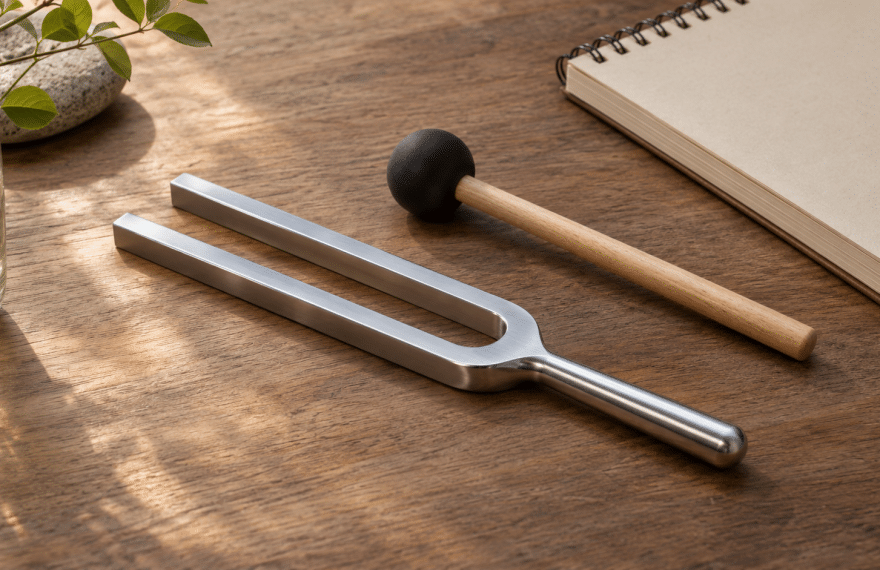
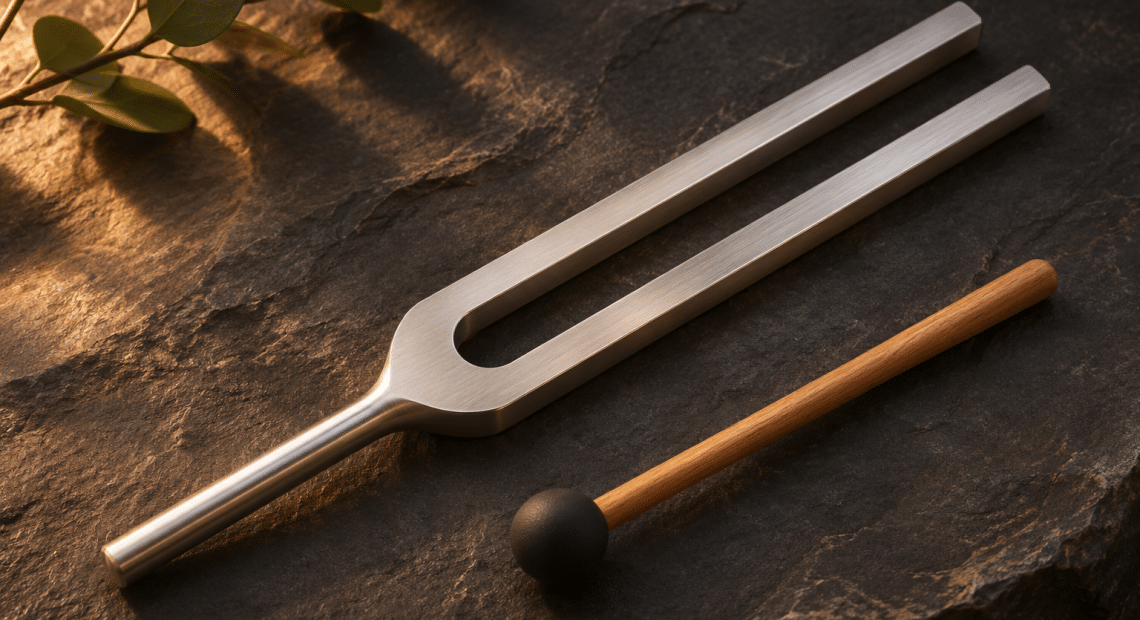
What happens when you give one sound your undivided attention? Before collecting instruments, comparing elaborate frequency charts or deciding what a tone means, there is a smaller question worth exploring: can you hear it without immediately turning the experience into a story? A tuning fork

A rattling singing bowl offers useful feedback about touch, speed and contact. Explore the acoustics behind chatter, practical playing tips, and two current bowl sets from Flat Earth Shop.
FES advertisement Four tuning-fork frequencies 128, 136.1, 256 and 384 Hz. US shipping only. Explore at FES → A number is a beginning, not an explanation Pick up a tuning fork and the printed number can feel reassuring. Unlike a phrase such as “high vibration,” 128 Hz looks precise. It is precise about one thing: […]
Copper necklaces A Tree of Life in warm copper. Explore at FES → The work before the first note A singing bowl reaches us as a finished object. Its surface catches the light, a mallet rests nearby, and the first clear tone seems to arrive from nowhere. DharmaShop’s short film, Making Tibetan Singing Bowls in […]
Tibetan singing bowls Pause. Strike. Listen. Explore at FES → A beautiful recording can make a singing bowl feel like an immediate answer. You hear a generous tone, see a quiet setting, and imagine that same atmosphere in your own room. Before choosing an instrument, it helps to pause between those two experiences. Enjoying a […]
A singing bowl asks something surprisingly simple of us: make a sound, then stay long enough to hear it change. Before we turn that moment into a theory about energy or a test of our ability to meditate, we can meet it as an experience. Metal vibrates. A tone gathers, softens, and disappears. Attention wanders […]