A bowl of hummus can disappear into the background of a meal: open the container, find something to dip, put it away. Give it a little attention, however, and it becomes a useful exercise in cooking by judgment. How should it feel on a spoon? Which flavor arrives first? What would make the next bite more satisfying?
In How to make the best hummus of your life, Nisha Vora of Rainbow Plant Life explores texture, seasoning, and presentation. The video offers a starting point for a broader kitchen practice: learning what you enjoy, making deliberate adjustments, and giving a familiar plant-based dish a place at the center of the table.
Start With a Texture You Can Describe
Vora emphasizes very soft chickpeas, generous blending, tahini, and gradually added ice water. Her video moves from preparing the chickpeas to adjusting the finished mixture and serving it with a garlic-and-lemon topping. For quantities and full instructions, use her updated written recipe. It has evolved since the 2021 video, including guidance on simmering canned chickpeas, so the two versions should not be treated as identical.
Before you begin, decide what kind of eating experience you want. Picture the food that will accompany the hummus. A sturdy piece of bread invites a generous scoop; a delicate cracker asks for something easier to lift. Naming the intended use gives you a more helpful target than an abstract demand for perfection.
Try replacing the judgment “wrong texture” with a description: difficult to spread, too loose for this bread, or pleasantly substantial. Descriptions suggest a next step. They also keep preference separate from failure. You may want a different consistency for a packed sandwich than for a wide platter shared over dinner.
Taste the Bite You Plan to Serve
A spoonful on its own is only one version of the dish. Once you have tasted the hummus, taste it with the bread, vegetables, or other food you intend to serve. A strongly seasoned accompaniment may change your view of what the bowl needs. Make the decision at the scale of the actual bite.
For a useful comparison, put a small spoonful into a separate dish before experimenting. Add a little of your proposed adjustment there, leaving the main bowl available for a different choice. You can compare the sample with the original instead of trying to remember a flavor from several minutes earlier. Keep each comparison simple enough that you know what changed.
Ask a specific question each time. Would you prefer a sharper finish? Is the garlic more prominent than you want? Does the accompaniment already supply enough salt for your taste? These questions turn vague dissatisfaction into a decision you can make. Stop when the bite is enjoyable. An afternoon of endless corrections is not a requirement for a good lunch.
Let the Meal Decide the Presentation
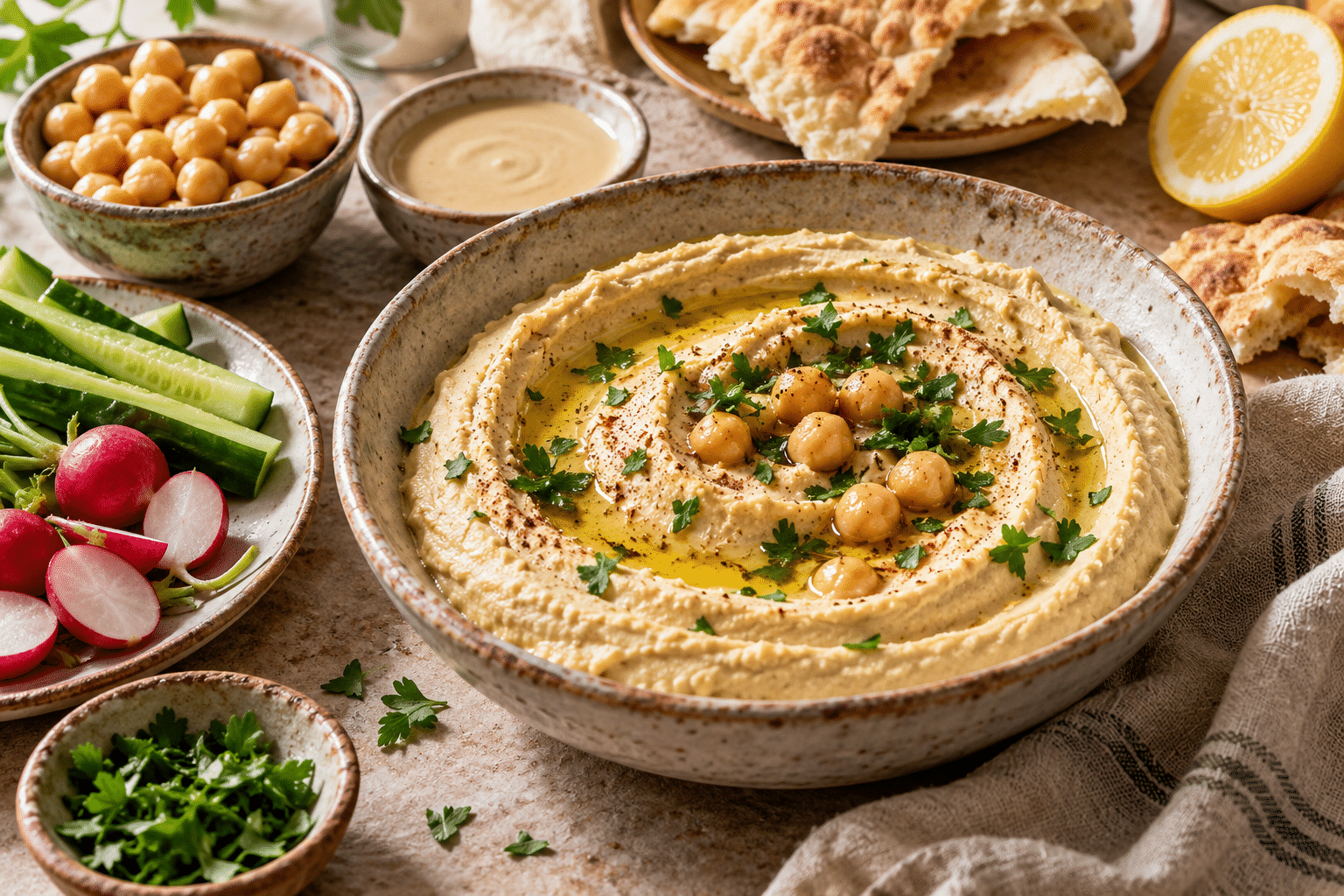
Think about where the hummus will be eaten before choosing a serving dish. For a quiet lunch at a desk, a compact container and food that travels neatly may matter most. For a table where people can linger, a broad plate makes room for several kinds of accompaniments. The same preparation can support very different occasions.
Consider making the bowl part of an assembly meal. Place a few contrasting components within reach and let each person decide how to combine them. You might set out cucumber batons, charred cabbage wedges, crisp bread, and a small dish of something pickled. Choose a manageable selection rather than buying an ingredient for every possible preference.
Then check the arrangement from a guest’s position. Can someone reach the bread without moving a glass? Is there a spoon for transferring hummus to individual plates? Is the platter so crowded that every serving becomes awkward? These practical details deserve as much attention as the decorative swirl on top. A beautiful meal should also be comfortable to eat.
Give Every Topping a Clear Purpose
A garnish earns its place when it contributes something you want in the next mouthful. Before scattering several ingredients over the bowl, decide which contrast interests you: a crisp edge, a little heat, a fresh aroma, or a sharper accent. Choosing one direction can make the finished dish easier to understand.
For an informal tasting, divide a platter into two areas and finish each differently. Leave a small portion plain for comparison. This turns presentation into a practical experiment: you can discover whether a topping improves your enjoyment or simply looks appealing. There is no need to declare a winner for everyone at the table.
Think about the size of each addition, too. A large piece that slides off the bread creates a different experience from something distributed through a scoop. Try a complete bite before carrying the platter out. If your chosen finish overwhelms the base, serve it alongside so people can decide how much they want.
Make Plant-Based Hospitality Feel Easy
A satisfying vegan table can begin with a dish people already know how to enjoy. Hummus offers a clear invitation: take some bread, choose an accompaniment, build a bite. For a mixed group, that familiarity can be a useful starting point for sharing food without turning the meal into a discussion that every guest must participate in.
Ask about food needs before planning the accompaniments, and keep ingredient information available. Someone should be able to ask what is in a dish without feeling that they are interrupting the occasion. Keep optional finishes in separate bowls when that makes serving simpler, and provide enough utensils that guests can choose components easily.
Generosity also involves choosing a workload you can sustain. If making hummus is the part you want to explore, let the rest of the meal be straightforward. You do not need to make the bread, invent three salads, and stage an elaborate table on the same evening. Leave yourself enough time to sit down and enjoy what you have prepared.
Build a Version You Will Want to Make Again
After the meal, write down three observations: the texture you liked, the accompaniment that worked best for you, and one change worth trying next time. A few concrete notes are more useful than labeling the whole attempt a success or a disappointment. Record your preferences in words that will still make sense a week later.
Keep the next attempt focused. If you change the base, the seasoning, the serving temperature, and every accompaniment at once, you may enjoy the result without knowing what made the difference. Repeating a dish gives you a chance to notice small choices and become more comfortable making them.
The lasting pleasure is having something reliable to bring to your own table: a bowl suited to the people eating it, the time available, and the rest of the meal. Watch for the practical decisions in the demonstration, then bring that same curiosity to your next lunch.
Video credit: Nisha Vora / Rainbow Plant Life, How to make the best hummus of your life.