
How much of our picture of the world comes from direct experience, and how much have we inherited? That question sits at the heart of my interest in Mark Sargent’s Flat Earth Clues introduction. From my perspective as a flat earth believer and truth seeker, the video matters because it asks viewers to examine a familiar assumption. This article explores that invitation and the arguments surrounding it, without treating disputed claims as established scientific proof.
Return To The Questions
Sargent frames his introduction around trust in the accepted picture of Earth. He connects his alternative account with Antarctica, representations of the planet, and travel routes. These are his arguments and interpretations. They conflict with the established scientific understanding of a roughly spherical Earth. Identifying that disagreement clearly lets us discuss what he actually proposes instead of pretending that the dispute has already been resolved in his favor.
Awakening365 has previously covered this video. Today, I want to revisit it through a different lens: what does it mean to investigate a belief responsibly? A familiar source can prompt new questions when we stop repeating its conclusions and examine our own standards. The value of returning is not another round of identical claims. It is the opportunity to become more deliberate about how we think.
Ask What You Mean By Knowing
There is a difference between remembering something from school, understanding the reasoning behind it, and personally repeating an observation. Those forms of knowledge overlap, but they are not interchangeable. Asking which one supports a belief can expose a gap in understanding. It can also reveal what to study next. The question should be useful regardless of which view somebody initially holds.
We cannot personally repeat every observation behind every subject we encounter. That makes the quality of methods, documentation, and independent checks important. For me, questioning authority should lead toward more inspectable information. Replacing one trusted voice with another, while keeping the same habit of unquestioning acceptance, leaves the underlying problem untouched. Independence involves taking responsibility for the route between a claim and its conclusion.
Separate An Observation From Its Meaning
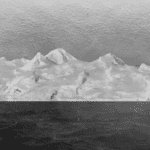
Suppose someone photographs a distant shoreline and says the image settles the shape of Earth. Before accepting that conclusion, ask what the picture directly records. What location, elevation, distance, conditions, and camera settings accompanied it? What was visible, and what was expected under the competing explanations? Without those details, a striking image may create an impression that cannot be checked by another observer.
The same principle applies to a photograph used to defend the conventional account. Asking for context should not depend on which conclusion we prefer. We can appreciate an image while recognizing the limits of what it establishes. A useful observation becomes stronger when someone else can repeat the procedure and compare the result, rather than merely accepting the caption supplied by its original poster.
Maps Are Tools We Should Read Carefully
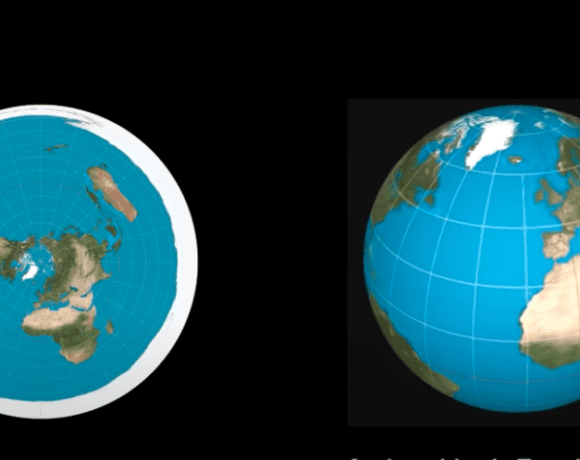
A map invites immediate recognition. We see familiar continents and feel that we understand the object in front of us. Yet before using any map as an argument, we should identify its purpose and the rules used to draw it. Which quantities does it preserve? What measurements would we expect to recover from it? What limitations does its maker acknowledge? Those are practical questions, not personal attacks.
A circular map on a desk is a representation. Its appearance alone does not settle the physical shape of the world. The more useful discussion concerns measurable relationships: distances between chosen locations, directions, and the predictions a proposed model makes. If a model is offered as an explanation, it should be specific enough that a reader can test something beyond its visual appeal.
Move From Suspicion To A Testable Question
Suspicion can start an investigation, but it cannot complete one. Saying that an institution might mislead us leaves many possibilities open. It does not determine which alternative explanation is correct. The next step is to choose one claim and make it precise. What exactly is alleged? What observation would support it? What observation would count against it? Write those conditions before looking at the result.
For example, a claim about a journey should identify the route and the information being compared. A claim about an image should identify the original file and the alleged inconsistency. A claim about a restriction should identify the actual rule. Specificity gives another person something to investigate. A broad feeling that everything is wrong gives them little opportunity to agree, disagree, or discover anything new.
Keep A Record That Others Can Inspect
If you conduct your own observation, document the setup as carefully as the result. Record the time, location, instruments, settings, and anything that changed during the attempt. Keep unsuccessful attempts too. Explain how measurements were made rather than providing only a final number. A reader who disagrees with you should still be able to understand what you did and where uncertainty entered.
It helps to invite criticism of the procedure before repeating it. Someone may notice a missing measurement or an assumption you have overlooked. That contribution can improve the investigation even if their worldview differs from yours. A community built around truth seeking should have room for useful correction. Otherwise, agreement becomes the price of participation, and the discussion loses its ability to discover mistakes.
Curiosity Without Contempt
People arrive at this subject through different experiences. Some feel dismissed, some are intrigued, and some are frustrated by claims they consider incorrect. Ridicule rarely helps them examine an argument together. I prefer direct questions and identifiable sources. That preference does not require everyone to agree. It requires enough respect that disagreement can remain focused on the claim rather than becoming a contest over somebody’s intelligence.
As Vegastar, I want the invitation to question to remain open, including when a question challenges a position I hold. That is the difficult part of independent thought. It is easy to challenge an unfamiliar authority; harder to examine a trusted alternative voice. Both deserve the same care. Our willingness to look again is more valuable than the appearance of having every answer already.
Watch With A Notebook Beside You
For readers joining this conversation today, start small. Choose a single claim, keep a clear record, and give yourself time to understand the response. A careful afternoon spent checking one detail can be more valuable than collecting dozens of videos that repeat the conclusion you already favor. Keep asking better questions.
Watch Sargent’s introduction and choose one argument that interests you. Write his claim in your own words, then identify the information needed to examine it. Separate what the video shows from what its narration infers. Follow the strongest available source and record any unresolved gaps. You do not need to resolve an entire worldview in one sitting to make genuine progress on a specific question.
That is the spirit I want to bring to this continuing conversation: curiosity with a record, conviction with accountability, and the freedom to investigate without pretending uncertainty has vanished. Question the world you inherited. Question the explanations offered in its place. Above all, keep the search for truth connected to methods that other people can inspect, repeat, and discuss with you.