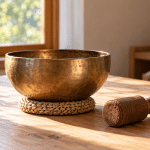
A singing bowl asks something surprisingly simple of us: make a sound, then stay long enough to hear it change. Before we turn that moment into a theory about energy or a test of our ability to meditate, we can meet it as an experience. Metal vibrates. A tone gathers, softens, and disappears. Attention wanders and returns.
Shakti Sound Meditation’s How to Play a Singing Bowl, featured above, offers a short introduction to the instrument. Watch the contact between bowl and mallet, then give yourself permission to begin slowly. You do not need a dramatic sound or a perfectly quiet mind. You need a comfortable place, a light touch, and a little curiosity about what you actually hear.
Begin with a sound you can comfortably hear
Choose a stable seat and let your shoulders settle. Put the bowl on a suitable cushion or support it securely without gripping its sides. Keep the rim free. The aim is to let the instrument resonate while keeping your hand and the bowl comfortable. A small bowl may feel steadier on supported fingertips than on a tightly cupped palm.
Start with one gentle strike using the appropriate end of the mallet. Let that be enough. Listen before making another sound. If the first note is louder than expected, reduce the force next time. There is no reward for filling the room with volume. A tone that feels easy to listen to makes a better beginning than one you have to endure.

Learn the rim without rushing it
The sustained rim tone takes a little experimentation. Bodhisattva Trading Company’s playing guide recommends an upright mallet, steady pressure, and a smooth movement around the outside of the rim. It also points out a common beginner’s mistake: moving too fast. Let the sound build rather than trying to force it into existence.
Try a few unhurried circles. Keep the movement easy through your arm instead of tightening your wrist. If the mallet chatters, pause and change one thing: slow down, adjust the angle, or make the contact more consistent. Different bowls and mallets respond differently. Treat the instrument’s response as useful feedback, rather than a verdict on whether you are doing the practice correctly.
You can alternate a light strike with a short attempt at the rim. After each attempt, lift the mallet away and listen to the remaining tone. This gives your hand a break and reminds you that playing and listening belong together. A session does not have to become one continuous performance.
Listen for change, rather than a special result
A note can feel steady at first, then reveal several textures. You might notice a higher ringing edge, a lower sound beneath it, or a wavering quality as it fades. There is no requirement to identify these correctly. Simply notice what is clear, what becomes quieter, and when you stop being able to hear the bowl at all.
Notice your own contribution, too. Perhaps you anticipate the next strike before the current sound has ended. Perhaps you judge the note as beautiful or disappointing. Neither response ruins the moment. You can hear the judgment as another event and return to listening. This is a small, practical way to explore attention without demanding that attention become flawless.
The silence afterward matters. Leave a little room between sounds. Let ordinary noises remain part of the room: a passing car, a bird, someone moving nearby. A listening practice can include life as it arrives. You do not need to manufacture a sealed world in which nothing interrupts you.

A five-minute practice for an ordinary day
For the first minute, sit comfortably and take a few natural breaths. Feel where your body meets the chair or floor. You can keep your eyes open. Look at the bowl without immediately reaching for it. This brief arrival helps you notice the difference between having an intention to pause and actually allowing a pause.
During the next two minutes, make occasional gentle sounds. Follow each one as far as you comfortably can. If you want to try the rim, do so briefly, then stop and listen. Leave enough space that you are not chasing the next note. Your timing can stay flexible; the clock is a loose container, not another demand.
Spend the final two minutes without playing. Notice your breathing and the surrounding room. Before standing, choose one small way to carry that quality of listening forward. Perhaps you will let someone finish a sentence, eat the first few bites of lunch without a screen, or pause before replying to an irritating message.

Keep the claims as gentle as the practice
A bowl can be meaningful without being assigned a medical promise. You may enjoy its sound, find the routine settling, or discover that you prefer silence. Those are personal experiences. They do not demonstrate that a particular pitch treats an illness, repairs the body, or produces the same effect in everyone.
Likewise, a bowl’s appearance or a seller’s use of the word Tibetan does not establish the antiquity of every modern practice associated with it. We can appreciate craftsmanship and contemporary contemplative use without inventing a history. Ask clear questions about materials, origin, included accessories, and the sound of the particular instrument you are considering.
Keep volume comfortable and avoid playing close to anyone’s ears. If a sound feels unpleasant, stop or move farther away. Ask before playing around other people. Respecting your own response and theirs is part of attentive practice; there is no need to push through discomfort to prove that a session is working.
Let listening be enough
You do not have to make the bowl sing beautifully every time. Some days the useful moment will be the imperfect note that makes you smile. Other days it will be noticing how quickly you reach for another sound. Stay curious about both. The instrument gives you something concrete to meet, and the pause gives you room to meet yourself.
When the last vibration fades, resist the urge to decide whether the session was successful. Put the mallet down carefully. Feel your feet, look around, and return to the next ordinary task. A few minutes of sincere attention can be worthwhile without becoming a grand claim about what has changed.