What can a single tone offer the body?
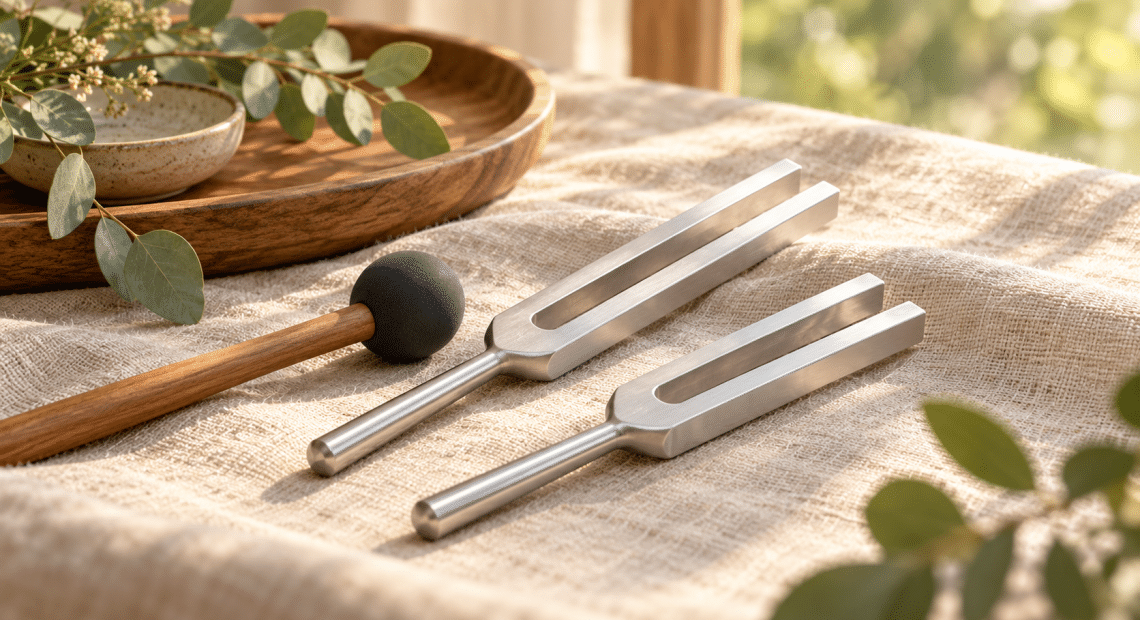
A tuning fork asks very little of the listener. Activate it gently, let the note unfold, and notice what happens while it fades. For someone drawn to sound healing, the attraction may be a feeling of quiet, a softer grip in the hands or a brief return to bodily awareness. These experiences can matter without requiring us to make a promise about curing illness.
The phrase sound healing covers many different practices. Here we focus on tuning forks: what practitioners do with them, what people may find beneficial, and where the evidence needs careful interpretation. This is a different question from simply learning an intentional-listening ritual. It asks how to describe a bodily benefit honestly, how to evaluate the explanation attached to it, and how to choose an instrument without buying a medical promise.
Watch the method, then examine its explanation
In the accompanying video, Biofield Tuning founder Eileen McKusick explains her approach and demonstrates the movement of a vibrating fork around a person. She distinguishes weighted forks used on the body from unweighted forks used around it. She also describes a proposed map of memories and emotional experiences in a field surrounding the body, and makes claims about relief from several health conditions.
Those explanations belong to McKusick’s method. A demonstration does not establish that memories are stored outside the body, that a fork can identify trauma, or that the technique treats the conditions named. Viewers can appreciate the opportunity to see a practice while keeping its mechanism and medical claims open to scrutiny. The video is a practitioner’s account, not a controlled clinical trial.
Relaxation is a worthwhile possibility
A quiet listening session may give someone permission to stop multitasking and rest. The sustained tone provides a simple point of focus. A person might notice their shoulders settling, their jaw unclenching or their breathing becoming less hurried. These are possible individual experiences, not guaranteed physiological effects of a particular fork. Some people will feel little change, and others may dislike the sound.
It helps to name the result precisely. “I felt calmer for a while” is a useful report. “This frequency repaired my nervous system” makes a much larger claim. The first describes an experience. The second proposes a biological mechanism that needs independent evidence. We do not have to inflate the first statement to make it valuable.
What broader sound research can tell us
The US National Center for Complementary and Integrative Health summarizes research suggesting that some music-based interventions may help with anxiety, depressive symptoms and pain in particular settings. Its overview also makes clear that findings depend on the condition, intervention and quality of the research. These are not interchangeable treatments.
Music therapy, listening to recorded music, singing bowls and hand-held tuning forks differ substantially. Results from one cannot automatically establish the effectiveness of another. The evidence reviewed for this article does not establish a reliable tuning-fork treatment for disease, organ repair or trauma removal. A comforting session may complement ordinary self-care, but it should not replace assessment or treatment when symptoms need medical attention.
Body awareness without a diagnostic story
Sound can become a prompt to notice the body you already inhabit. Before listening, ask where you feel tense and whether your posture is comfortable. Afterward, observe again without searching for a dramatic transformation. You might notice warmth, restlessness, easier breathing or no obvious difference. None of these responses needs an elaborate interpretation to be worth recording.
If a practitioner describes a sensation as proof of an old emotional injury, you are allowed to ask how that conclusion was reached. A sensation alone cannot verify a forgotten event. A supportive setting should leave you free to disagree, stop or decline an explanation. Personal meaning is most useful when it remains yours to choose, rather than becoming a diagnosis delivered through an instrument.
Frequency labels are not prescriptions
A number in hertz describes frequency. It does not, by itself, tell us that a tone repairs a specific organ or produces the same effect in every listener. Chakra names and other symbolic associations may provide a framework for contemplation, but a symbolic framework is different from a validated medical mechanism. Keep that distinction visible when reading promotional descriptions.
A recording also differs from holding a physical fork. Your speakers, headphones and volume settings influence the sound you receive. The tactile experience of an instrument cannot be reproduced simply by watching a demonstration. There is no need to compensate by increasing the volume or placing a ringing fork close to the ear. Comfort is a better starting point than intensity.
Choosing a set for personal exploration
The Flat Earth Shop Tuning Fork Set — Chakra Sound Journey offers eight weighted forks for listening and sound exploration. At the time of checking, the listing showed eight available, a price of $215 and delivery within the United States only. The current product information does not specify the individual frequencies. Ask for those details if exact pitches are important to your purpose.
This set is not identified as the same equipment used by McKusick in the video. Choose it for its listed design and your intended practice, rather than assuming it reproduces her method or its claimed results. Check what is included, how the forks should be activated and which instructions accompany them. A clear answer about an ordinary product detail is more useful than an expansive promise about transformation.
A gentle way to assess your response
Start with a short, comfortable listening period in a quiet place. Sit with support and let your breathing remain natural. Follow the manufacturer’s instructions for gentle activation. Keep the sound at a comfortable distance and volume. There is no need to press an instrument against the body or follow a treatment sequence to explore whether you enjoy its tone.
Before and after, note a simple measure such as how tense or settled you feel. Include context: were you tired, rushed, sitting comfortably or finally taking a break? Compare another day with a quiet rest of similar length. This is personal observation, not a clinical experiment, but it can help you decide whether the practice earns a place in your routine.
Care includes the freedom to stop
Stop if the sound causes discomfort, ringing, dizziness, distress or a headache. If you have sound sensitivity or an ear condition, ask an appropriate health professional about suitability. For a session involving direct contact or treatment claims, discuss your health circumstances and the practitioner’s qualifications beforehand. Persistent pain, sleep disruption or other symptoms deserve proper evaluation rather than an escalating search for the perfect frequency.
The most credible benefit of a personal sound practice may be modest: time set aside to rest, listen and notice. That is enough to explore with curiosity. Enjoy what feels supportive, remain clear about what has actually changed, and keep medical claims accountable to evidence. A tone can accompany care for the body without being asked to explain or cure everything the body experiences.