“How do I love myself?” is a large question in a few small words. It can sound like a demand to feel warmly toward every part of oneself at once. In a short teaching shared by the official Plum Village channel, Thich Nhat Hanh begins somewhere gentler: with attention to the body, to breathing, and to the feelings that are already present. His approach does not require a perfect mood before practice begins. It asks what happens when we stop treating discomfort as an enemy and learn to meet it with care.
Begin with what is here
The Plum Village video, How do I love myself?, is a Buddhist teaching rather than a clinical program. That context matters. Thich Nhat Hanh speaks as a teacher within a living tradition, offering practices that help people notice and care for their experience. We can take his invitation seriously without presenting every phrase as an experimentally established fact or promising that a brief exercise will solve distress.
Many of us respond to difficulty by asking for a faster route out. We want the tension to disappear, the anxious thought to stop, or the sadness to justify itself before we give it space. The teaching offers another first step: recognize what is happening. The Plum Village guide to mindfulness practice describes returning attention to breathing, walking, and ordinary activities. Attention is not the same thing as approval. Noticing a tight shoulder does not mean we like the tightness. It means we have stopped ignoring the body long enough to respond with care.
Let the body join the conversation
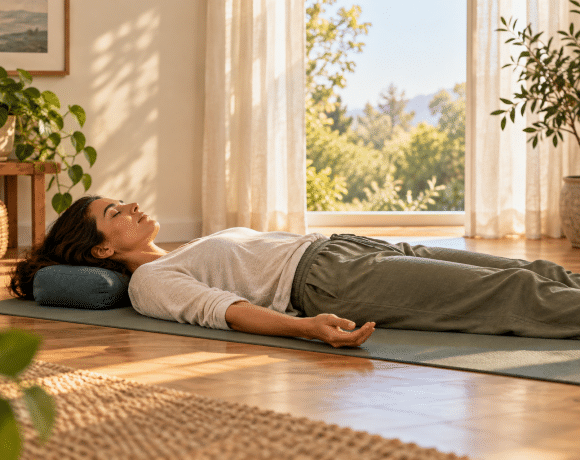
It is easy to ask “How am I?” as though the answer lives only in an inner stream of words. A body can give a simpler answer: tired, restless, hungry, warm, tense. Thich Nhat Hanh invites listeners to come home to the body before trying to settle every thought. This can be an ordinary pause. Sit in a way that feels comfortable, notice the contact of your feet with the floor, and allow one breath to be just one breath. If sitting still is uncomfortable, the same attention can accompany a short walk.
Plum Village’s translation of the Discourse on the Full Awareness of Breathing shows that mindful breathing has a textual place within Buddhist practice. It does not ask us to invent a new mechanism for it. A breath can serve as a point of return when attention has scattered. That is a practical description of an exercise, not a guarantee about what a nervous system will do. People have different bodies and histories; a gentle practice may feel helpful to one person and difficult to another.
There is also no prize for forcing the breath into a special rhythm. In the spirit of the teaching, the task is to notice it and make room for the present experience. Someone who feels strained can stop, change position, or choose another form of grounding. Care is not proved by pushing through discomfort. It includes recognizing a limit.
Make room for a small joy
The question of self-love can become so serious that it leaves no room for delight. In the video, Thich Nhat Hanh points toward simple moments of enjoyment as part of learning to care for oneself. A warm cup, a patch of sunlight, a friendly voice, or a few quiet steps might be available on an ordinary day. These are not substitutes for grief or hardship. Their value is that they need not wait until every difficulty has been resolved.
Try naming one pleasant detail without commanding yourself to feel grateful for it. “The light on the table is soft” is enough. If you feel nothing special, that observation is still honest. If the moment brings ease, let it be ease without making it a duty. The practice is not to manufacture happiness but to notice that experience has more than one texture. This is a modest reading of the teaching, not a claim that attention can override depression, trauma, or material problems.
Meet a difficult feeling without a verdict
Thich Nhat Hanh also asks us to recognize painful feelings rather than banish them. That can be harder than enjoying a small pleasure. A worried thought may immediately summon a second thought: “I should not feel this.” An angry feeling may arrive with shame about being angry. The practice of naming what is here can create a little space between the first feeling and the judgment layered over it. We might say, “Worry is here,” and notice where it is felt, without insisting that this sentence makes the worry disappear.
Plum Village’s reflection on loving and trusting ourselves places care and trust within ongoing practice, not a one-time declaration. Some days care may mean sitting quietly. Another day it may mean asking a friend for help, taking a rest, setting a boundary, or seeking professional support. The teaching can accompany those choices; it does not replace them. For a person whose feelings are overwhelming, appropriate support matters more than performing an exercise correctly.
We should also resist turning a compassionate teaching into blame. A person does not suffer because they failed a test of self-love. Pain can arise from loss, illness, relationships, injustice, and many other conditions. A practice of gentle attention is one possible way to respond to experience; it is not an explanation for why every hardship occurred. That distinction protects the teaching from becoming another demand placed on someone already carrying too much.
Care for others without a false prerequisite
The video connects care for oneself with the capacity to care for others. That is an invitation to examine a relationship, not proof that a person must achieve complete self-love before offering love to anyone else. In real life, care often grows in both directions. We learn from being helped, from helping, from mistakes, and from returning to a relationship with more honesty. The useful question may be whether we can extend some of the patience we offer a friend toward our own difficulty, and whether that makes our presence with others more attentive.
One exercise is to listen for the tone of a sentence you say to yourself. Would you use the same words with someone you respect? If not, try rewriting the sentence without pretending the problem is gone. “I made a mistake and can repair it” is different from “I am a mistake.” Such language does not erase responsibility. It may make responsibility easier to carry because it leaves room for action after the verdict.
Return, without rushing
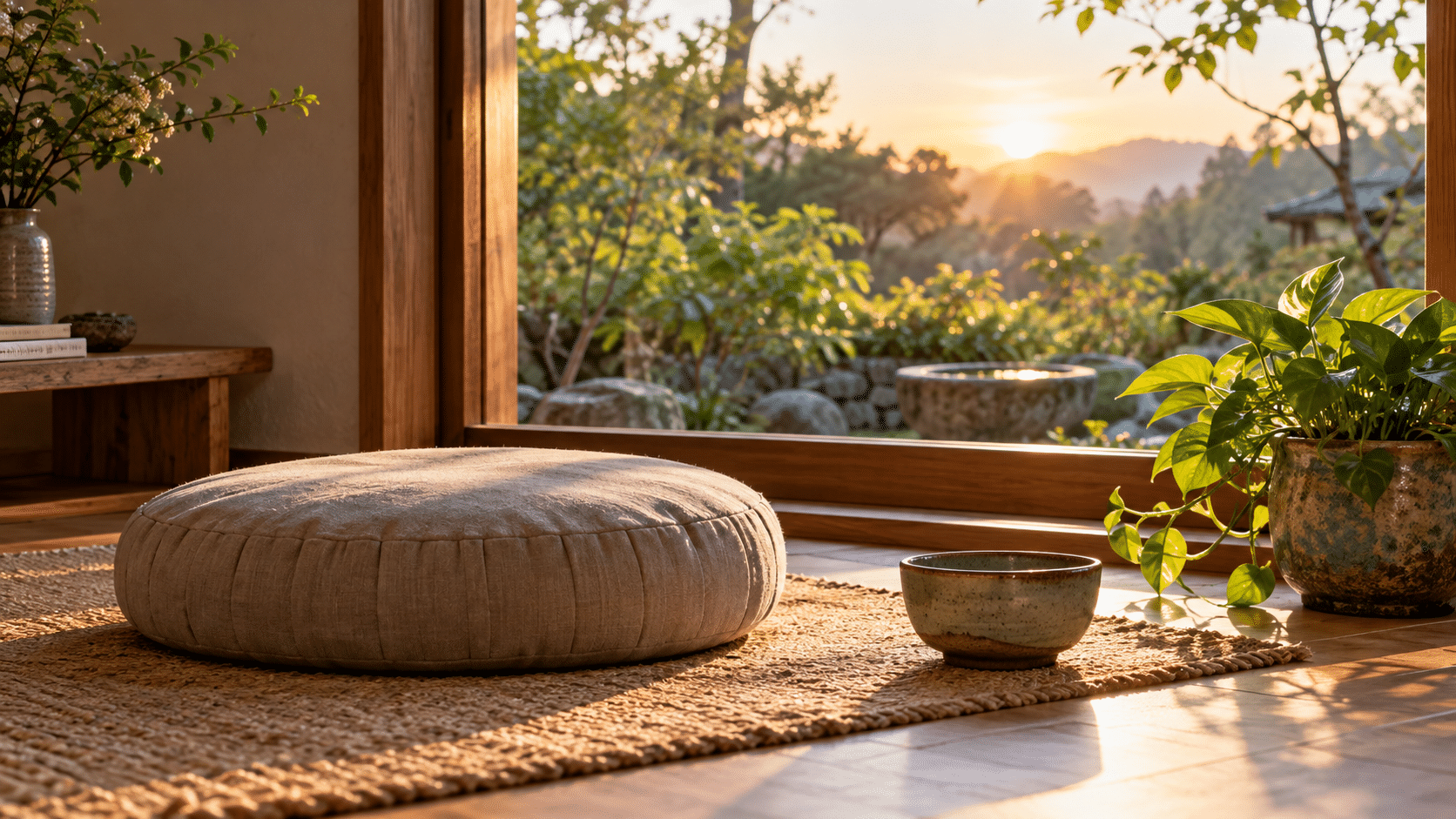
Our site recently explored Thich Nhat Hanh’s walking meditation; this video asks a different question. Here the center is how attention, the body, joy, and difficult feelings can belong to an ongoing practice of care. Watch the full teaching and notice which suggestion feels possible today. Choose one small response, then leave room to revise it. Perhaps the first step is simply a pause beside a window, with no pressure to feel transformed.
Self-love, in this reading, is less like a final state than a way of returning. It can begin by acknowledging what is already present and meeting it with less hostility. The teaching is a Buddhist invitation, open to reflection and practice. Its strength lies in its gentleness and its refusal to require perfection before care can begin.