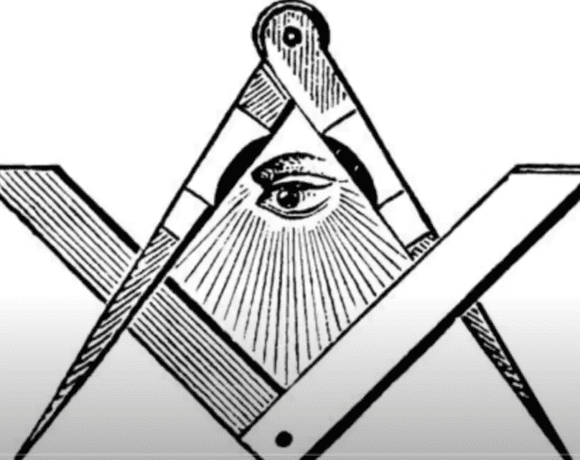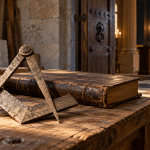
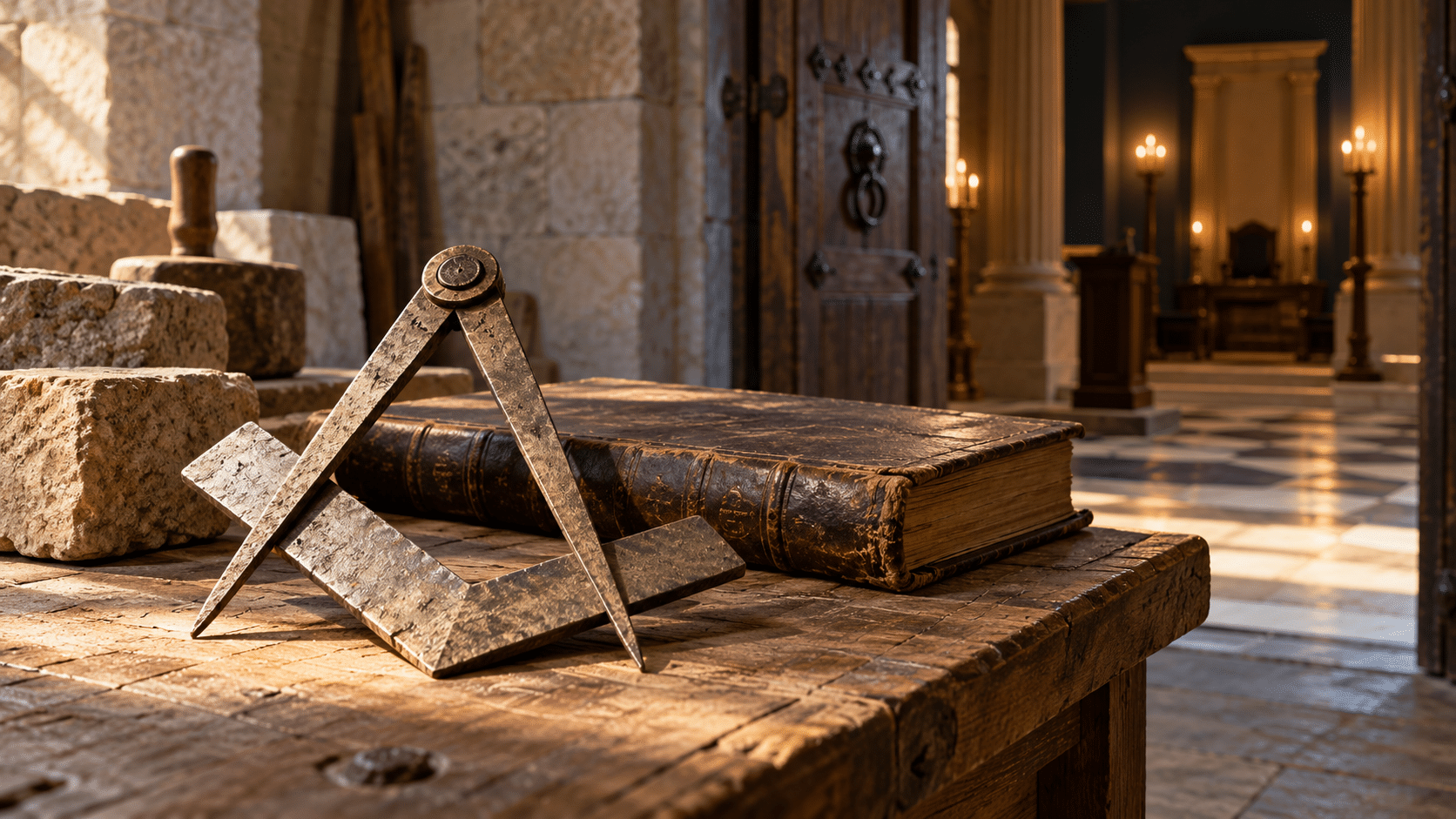
A square and compass can suggest a builder’s craft, a private ceremony, or a plot, depending on who is looking. The Infographics Show’s What Did The Mysterious Secret Society Of Freemasons Actually Do uses that tension to ask a question many people have heard but few have examined closely. The answer is more interesting when we separate documented history from the stories that have grown around it. Secrecy is part of the subject; it is not an excuse to treat every speculation as fact.
Start with the part we can document
Freemasonry developed from traditions associated with stonemasons and their lodges, but the precise path from craft organization to modern fraternity remains debated. The United Grand Lodge of England’s historical account notes an initiation recorded by Elias Ashmole in 1646 and identifies the gathering of four London lodges in 1717 as the beginning of the first Grand Lodge. Those dates anchor a history. They do not prove a direct, unbroken line to every ancient builder, temple, or esoteric order sometimes invoked in popular retellings.
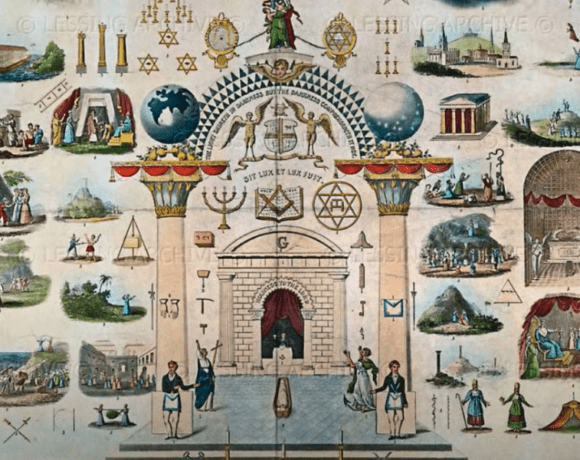
This distinction matters because a symbol can travel farther than an institution. Stoneworking tools existed long before modern Freemasonry. A square pictured in an old building is not, by itself, evidence that its makers belonged to a later fraternity. Similar images may come from the shared language of building, geometry, and moral metaphor. To trace an organization, we need records of people, meetings, rules, and continuity, not merely a familiar shape.
What happens inside a lodge?
A lodge is a local group where members meet. Practices vary by jurisdiction, but the public descriptions offered by Masonic bodies include ceremonies, administration, friendship, education, and charitable activity. The United Grand Lodge of England describes three principal degrees: Entered Apprentice, Fellowcraft, and Master Mason. It presents them as staged lessons about equality, learning, character, and mortality. That is the organization’s account of its own practice, and it is useful evidence about what it says it does. It is not independent proof that every member always lives up to those ideals.
Ritual often feels strange when observed from outside. In many communities, formal words, clothing, and repeated actions mark a transition: a graduation, an oath, a remembrance. A Masonic ceremony can be studied in the same way—as a structured use of symbolism—without assuming that unfamiliarity implies a hidden command system. The specific meanings attached to symbols can differ across lodges and eras, so a confident explanation of one universal “secret” should be treated cautiously.
There is also a practical reason to avoid speaking of Freemasonry as though it were one office with one worldwide plan. Grand lodges have different rules and relationships. Even the phrase “the Freemasons” can hide important differences in country, membership, tradition, and recognition. A claim about one group cannot simply be transferred to all the others.
Why did secrecy become the headline?
Private membership ceremonies and signs naturally attract curiosity. So do networks that have included prominent figures. In an age when public institutions are often distrusted, a closed meeting can appear to explain events that are otherwise complex and frustrating. The leap from “some members know one another” to “the organization controls an event” is still a leap. It needs a traceable decision, a record, and a causal link. A photograph of two members together does not provide those things.
The history of anti-Masonic suspicion is itself worth studying. Critics have raised questions about favoritism, political influence, religion, and private loyalty. Some concerns are the sort any membership organization should answer with transparency and accountability. Others expand into claims so broad that no counterevidence is allowed. When a theory explains every outcome, including the absence of evidence, it becomes difficult to test. A careful reader should ask what specific evidence would count against it.
The same standard should apply to a fraternity’s self-portrait. Public service and donations are real activities, but they do not erase every question about access or influence. A balanced account can acknowledge both the work an organization documents and the questions the public is entitled to ask. Neither automatic suspicion nor automatic trust is an investigation.
The people left outside a simple story
Popular introductions often describe Freemasonry as a men’s fraternity. That is true of some major grand lodges, including the United Grand Lodge of England, but it is not the whole picture. The same organization’s guidance on other Masonic bodies acknowledges grand lodges for women and mixed groups. Their relationships to men-only bodies differ. This is a good example of why precise names matter: a rule in one jurisdiction is not a statement about every form of Freemasonry everywhere.
Our site has previously explored a BBC report on women Freemasons. The Infographics Show video opens a different question: how can a brief, animated explanation handle centuries of history without letting mystery take over? One way is to notice whose experience the story includes and whose it leaves out. Another is to follow its claims back to records rather than assuming the dramatic version is the complete one.
Watch an explainer with three questions in mind
First, ask when and where a claim belongs. A detail from eighteenth-century London may not describe a lodge today. Second, ask whether the source is a surviving record, a later interpretation, or an allegation. Third, ask what a symbol is doing in context. A compass on a lodge emblem can express a moral lesson; finding a compass elsewhere does not establish common ownership or intent.
These questions need not drain the intrigue from the subject. They make it possible to enjoy an accessible introduction while keeping a firm grip on evidence. The familiar tools of the craft become more evocative when we know they have been used to teach, to identify community, and to invite self-examination. Their meanings have histories, and histories are richer than a single code.
Freemasonry remains a subject where the boundary between private tradition and public interest deserves thoughtful attention. The Infographics Show offers a starting point. Follow it with the recorded timeline, compare accounts from inside and outside the fraternity, and name uncertainty where the record is thin. The most satisfying answer to a mystery is not the most dramatic one. It is the one that survives a closer look.