A copper cuff can catch the light one way when it is new and look quite different after it has become part of your daily life. That changing surface is worth understanding before you decide it needs fixing. Copper patina brings together chemistry, design and personal taste: what happens to a material, what its maker intended, and how you want to live with it.
The familiar green of the Statue of Liberty offers a striking starting point. A bracelet calls for a closer, more practical view. Its finish, construction and care instructions matter more than a comparison with a monument standing outside for generations.
Begin with the copper in the video
In Why is the Statue of Liberty Green?, Reactions, the American Chemical Society’s video series, introduces the chemistry behind the statue’s changing colour. The ACS companion page describes its progression from reddish copper through brown to the blue-green familiar today, over roughly thirty years of exposure to New York harbour air.
That example makes an ordinary observation easier to appreciate: the appearance of a metal can change because its surface reacts with its surroundings. The video is a useful introduction to that idea. It does not demonstrate the ageing of a particular bracelet or establish a schedule for how your cuff will look.
Patina describes more than one appearance
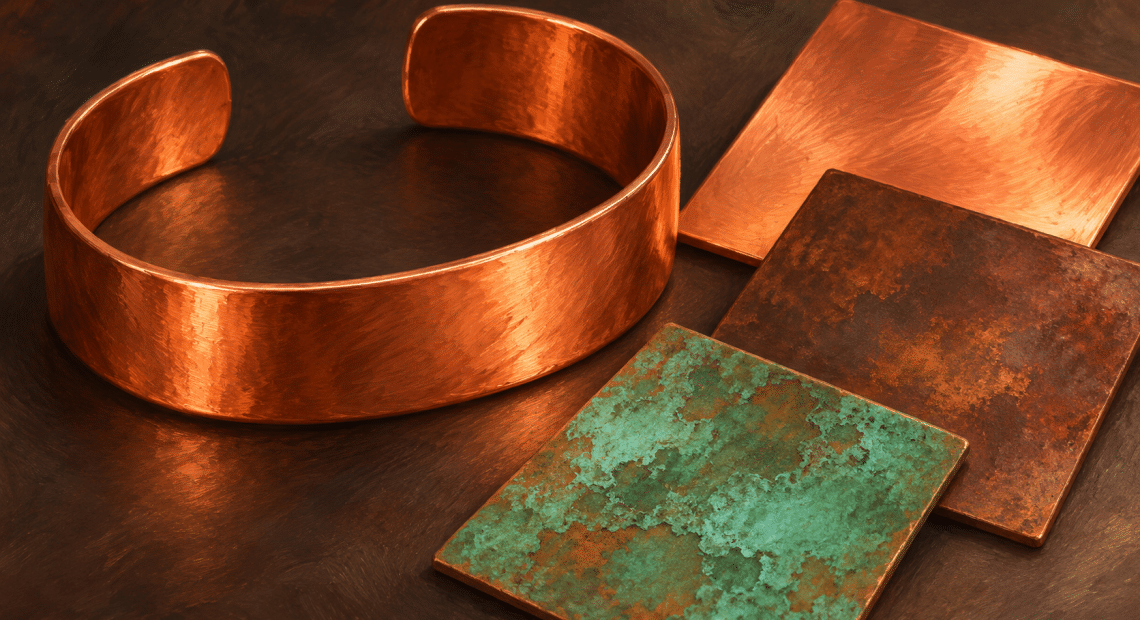
Green is only part of the story. The Getty’s guide to patina on bronze sculpture describes surface changes involving compounds with colours including red, black, blue and green. It also explains that patinas can develop naturally or be deliberately created by a maker. In art, the word can even include applied coatings that alter colour or sheen.
This broad use of the word is a reason to ask specific questions. A darkened recess, a coloured finish and a naturally changing bare surface need not have the same origin. You cannot identify a product’s construction simply by matching its photograph to the colour of an old statue. Ask what the piece is made from and whether its surface has been coated or intentionally treated.
Why a roof cannot predict your bracelet
The Copper Information Center’s account of outdoor weathering explains that local atmospheric conditions influence a patina’s composition and appearance. Architectural copper may darken through brown before eventually developing green tones. Different copper alloys follow different patterns, and the changes are not entirely predictable. A developed patina can help protect outdoor copper against further weathering.
These observations concern material exposed outdoors. A cuff has another life: it is worn, handled, put away and cleaned. A finish may also separate its underlying metal from direct exposure. The sensible expectation is variation, rather than a promise that every piece will reach a particular shade. Neither a fast change nor a slow one tells you, by itself, whether you chose well.
Read the actual cuff description
Flat Earth Shop describes its Elemental Signature cuff as solid, uncoated copper with a gently adjustable open design. Its eight listed styles include Plain, Hammered, Floral and Distressed. The listing explicitly says its surface develops a patina with wear. Its care guidance is straightforward: adjust gently, use a soft cloth and store it dry.
The Rooted Connection cuff is described as copper construction with integrated magnets and a choice of Tree of Life or knot motifs. Its published measurements are approximately 17.5 cm long and 1.5 cm wide. The page advises gentle adjustment, soft-cloth cleaning and following the supplied magnetic-jewellery precautions. It does not provide the same explicit uncoated specification as Elemental Signature.
Both product pages currently state United States delivery only. Confirm your selected option, fit and delivery eligibility before ordering. If preserving the original appearance is important to you, ask the shop about the exact finish and suitable care before choosing a cleaning product.
Cleaning and polishing do different jobs
The Canadian Conservation Institute makes a useful distinction in its guidance on brass and copper: cleaning removes unwanted material, while polishing is abrasive and removes some of the surface metal along with tarnish. Repeated polishing can reduce surface detail. The guidance also warns that a coating or intentional patina may be part of an object’s intended appearance.
For a wearable piece, take that principle as a reason for restraint. Museum treatment methods are not a home jewellery-care recipe. Follow the instructions for your cuff rather than borrowing a treatment intended for cookware, roofing or an antique. An unfamiliar patch is a good reason to pause and ask the seller, especially if you do not know the finish.
Decide what you enjoy before changing it
There is a personal choice here that chemistry cannot make for you. Some people enjoy a bright, even surface. Others prefer the softer appearance of an object that no longer looks newly unpacked. Neither preference requires a grand explanation. The useful question is whether the look you want is compatible with the piece you own and the care you are willing to give it.
Before trying to restore a photograph’s shine, look at the cuff on your wrist in ordinary daylight. Does the changing colour bother you, or did you assume every change was a defect? Would you choose the current appearance if it were shown as a separate option? Those questions can save an unnecessary attempt to alter something you already like.
Keep a small visual record
If you are curious about gradual change, take a photograph when the cuff arrives and another occasionally in the same place. Use a plain background and similar lighting. Include the same side each time. A quick note about wear and any cleaning is enough; there is no need to turn your jewellery into a demanding project.
The purpose is modest: to compare your own observations. Avoid assigning a chemical name to every patch or treating your photographs as a purity test. They can help you describe a question clearly to the shop and notice details that memory tends to blur. They may also reveal that the change you thought happened overnight has been gradual.
For a useful question to the seller, include the product name and selected style, when you first noticed the change, and what you have already done to the surface. A clear photograph of the whole cuff and a closer view of the area are more informative than a description such as strange colour. Ask whether the appearance is expected for that specific finish and what care the maker recommends. Keep the original care information with your order details so that you can refer to it later, rather than trying to remember a cleaning suggestion from an unrelated page.
Let the material remain interesting
A cuff can carry a personal meaning while remaining an ordinary physical object. You might choose a tree motif because it reminds you of family, or an unadorned surface because you enjoy its simplicity. Those meanings belong to you. They do not require a claim that changing colour measures wellbeing or produces a health benefit.
Understanding copper patina gives you a more useful relationship with the object: clearer expectations, better care questions and room for your own taste. Choose the design you enjoy, learn its actual construction, and give its surface attention before deciding to change it.