When a doctor changes the way he eats for a month and films the results, the story is immediately compelling. The BBC’s video “UK doctor switches to 80% ultra-processed food diet for 30 days” has been watched more than seven million times. Dr. Chris van Tulleken’s experiment raises a question many people face in ordinary life: how much of what we eat is designed for convenience, shelf life, and effortless consumption, and how does that shape our habits?
The video is a powerful invitation to inspect our food environment. It is not, by itself, a clinical trial proving that one ingredient caused one symptom. To learn from it well, we need to distinguish a personal experiment from larger controlled research. That distinction does not weaken the conversation. It makes our choices more informed.
What “Ultra-Processed” Means
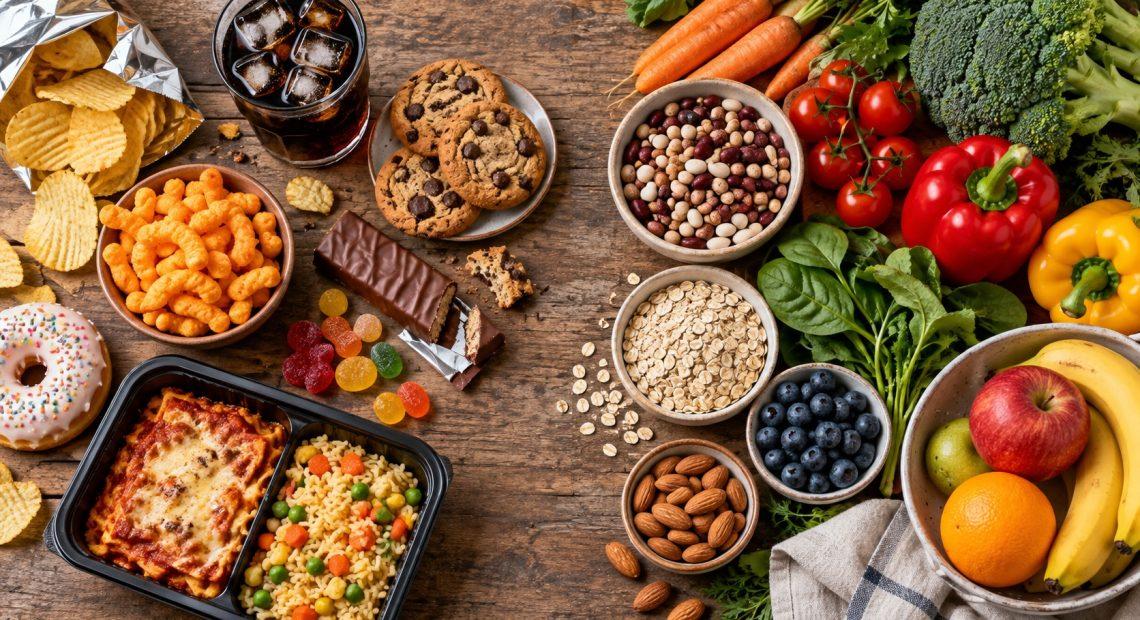
Not all processing is harmful. Washing vegetables, freezing berries, fermenting yogurt, and canning beans all change food. The term “ultra-processed” is usually associated with the NOVA classification, which focuses on industrial formulations often containing ingredients and additives that home cooks would not typically use. Examples can include some packaged snacks, sweetened drinks, and ready-to-eat meals.
The category is broad. Two products can both be called ultra-processed while differing greatly in nutrients, portion size, cost, and usefulness to a family. A packaged whole-grain bread and a sugary confection are not nutritionally identical. Labels can help us notice patterns, but they do not replace reading the ingredient list or considering the whole diet.
This is why a useful question is not “Is every processed food bad?” It is “What role does this food play in my day?” Does it make a balanced meal easier? Is it replacing foods that provide fiber and variety? Do I feel satisfied after eating it? Does the package encourage me to eat far beyond the amount I intended?
The Attraction of Effortless Eating
Ultra-processed foods can be appealing for understandable reasons. They are often quick, portable, consistent, and relatively cheap per serving. Families balancing work, travel, limited kitchens, or changing schedules may rely on them. A serious discussion of nutrition should recognize those realities rather than shame people for adapting to them.
Many products are also engineered to be pleasant and easy to consume. Texture, flavor, packaging, and portion size can affect how quickly we eat and whether we pause to notice fullness. The BBC video makes this environment visible through one person’s experience. But personal changes in mood, appetite, or weight can have several causes, including sleep, stress, total energy intake, and changes in routine. A self-experiment cannot isolate all of them.
The stronger evidence comes from controlled studies. In a small inpatient trial at the US National Institutes of Health, twenty adults spent two weeks on an ultra-processed diet and two weeks on a minimally processed diet, in random order. The meals offered were designed to be comparable on several nutritional measures, and participants could eat as much or as little as they wanted. During the ultra-processed period, participants consumed about 500 more calories per day on average and gained weight; during the other period, they ate less and lost weight. The published trial was short and small, so it cannot answer every long-term question, but it provides more controlled evidence than a single person’s filmed experience.
What the Research Does Not Settle
The NIH finding does not mean every ultra-processed product has the same effect on every person. Researchers continue to study which features matter most: energy density, eating speed, texture, convenience, combinations of ingredients, or other factors. Nor does a two-week trial establish all the long-term consequences of a lifetime of eating.
Health advice becomes less helpful when it promises a simple villain. Sugar, additives, packaging, and processing methods each deserve specific questions. A sweeping claim that one category “poisons” everyone turns a complex subject into a slogan. Better evidence asks what was measured, how diets were compared, and whether a proposed mechanism has been tested.
The same caution applies to the BBC film. We can take its observations seriously without treating one month as a universal forecast. A personal experiment can spark curiosity, identify a habit, and motivate a larger study. It should not be used to diagnose a viewer or guarantee what will happen if someone repeats it.
A Practical Way to Examine Your Own Routine
Start by noticing rather than judging. For a few days, observe which meals leave you satisfied and which send you searching for something else soon afterward. Look at the foods you reach for when you are rushed. Is the choice driven by hunger, convenience, price, or a cue such as a large package on the desk? The answer may be different at different times.
Then make one workable change. Add fruit, beans, or vegetables to a meal you already enjoy. Keep a simple meal available when your schedule collapses. Choose a snack in a portion you actually want rather than eating straight from a large bag. Compare ingredient lists between products you buy often. These are experiments in your own environment, not a demand for perfection.
If a packaged food helps you eat regularly, it may serve a useful purpose. The aim is not to reject every modern food technique. It is to preserve choice in an environment built to make some choices automatic. A person with medical conditions, dietary restrictions, or a history of disordered eating may need individualized advice rather than a viral challenge.
Curiosity Beats Fear
The BBC video succeeds because it makes an invisible pattern visible. Many of us eat within systems designed for speed and repeat purchase, while barely noticing how our habits are shaped. Its best lesson is not that we must copy a dramatic thirty-day test. It is that we can ask more precise questions about our food.
What are the ingredients? How quickly do I eat it? What else does this meal provide? What happens when I replace one habitual choice with another I enjoy? What does stronger research say, and where are the limits? Those questions leave room for science, pleasure, budget, culture, and real life.
Nutrition is not a contest to achieve a flawless label. It is an ongoing relationship with food and with the conditions in which we eat. A viral video can open the door. Careful evidence and sustainable habits help us walk through it.
One useful family exercise is to choose a single familiar food and compare several versions, including one you could prepare at home. Notice the price, preparation time, ingredients, and how filling each version feels. The point is not to pronounce a winner for everyone. It is to see the tradeoffs that a label alone can hide. A convenient product may save time on a difficult day; a simple homemade option may be more satisfying when time allows. The more clearly we see those choices, the less power an automatic habit has over us.
We can also ask for a better food environment rather than placing every burden on individual willpower. Clear labels, affordable ingredients, access to kitchens, and realistic work schedules all shape what people eat. Personal awareness matters, but so do the conditions that make healthy choices possible.
Watch: UK doctor switches to 80% ultra-processed food diet for 30 days — BBC