The work before the first note
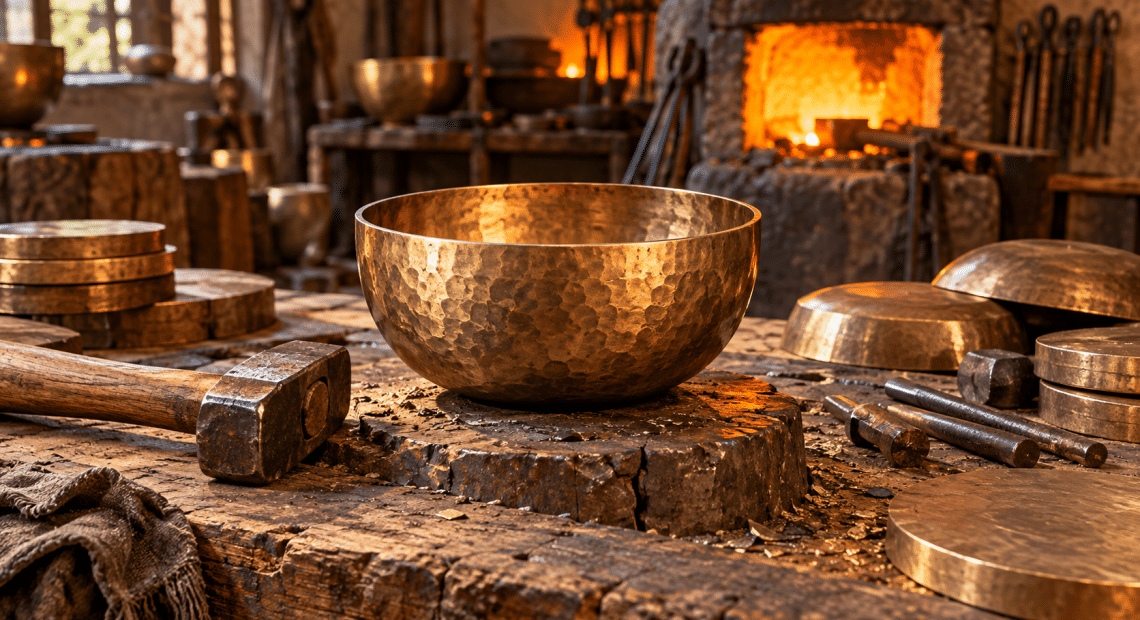
A singing bowl reaches us as a finished object. Its surface catches the light, a mallet rests nearby, and the first clear tone seems to arrive from nowhere. DharmaShop’s short film, Making Tibetan Singing Bowls in Kathmandu, invites us to look earlier in that story. Before a bowl becomes part of someone’s quiet morning, people have worked with material, tools, timing and repeated decisions. The sound has a history of hands behind it.
This article approaches the film as a small window onto craftsmanship. It is not a complete account of manufacturing, a historical survey of every bowl tradition, or evidence for a therapeutic promise. Its value is more immediate: it makes an everyday object less anonymous. Watching that brief workshop scene can change the questions we ask when something beautiful appears in a shop or on a screen.
Watch the movement, then watch again
The original clip lasts only twenty-eight seconds. That brevity makes a second viewing worthwhile. First watch without trying to learn a technique. Notice the movement, the relationship between tools and material, and the pace created by the edit. Then replay it with a narrower question: what can I actually observe, and what have I supplied from the title or my own expectations?
A film can show work without revealing every stage of it. An attractive sequence is not a production manual. We should avoid turning a glimpse into a claim about exact temperatures, alloy recipes, working conditions or the age of a tradition. The respectful response to skilled work is attention, followed by specific questions. Wonder does not require us to pretend we have learned more than the footage offers.
Let the maker remain visible
DharmaShop identifies the setting as Kathmandu and describes a March 2024 visit to artisans who make its bowls. Its accompanying material presents the business’s relationship with Himalayan makers. Those statements belong to that supplier and that workshop. They should not quietly become claims about every singing bowl with a similar appearance, or about a different retailer’s supply chain.
There is a simple habit here that travels beyond this particular instrument. Keep the maker, seller and object distinct. A video may document one workshop beautifully while a shopping page describes a separate product. If a seller cannot connect its own item to the people shown, appreciate the film on its own terms. A resemblance is not a record of origin.
The patience inside an object
Much of the work we encounter in daily life arrives with its labor hidden. A cup is already glazed. A chair is already assembled. A bowl is already on a cushion. We meet the result before meeting the process, and it becomes easy to treat an object as a picture with a price attached. A workshop scene briefly reverses that order.
Try carrying this reversal into your own surroundings. Pick one object you use often and imagine the decisions needed to make it usable. Which edge must feel comfortable? Which part must remain stable? Where would a small mistake matter? You do not need to invent a romantic biography for the object. The exercise is simply to remember that usefulness often contains effort we never witness.
A sound is also a relationship
The finished instrument belongs to a later moment: someone chooses where to place it, how to approach it and when to stop. That moment can be attentive without becoming elaborate. A bowl need not come with an identity, a doctrine or a promise of personal transformation. It can be an object you enjoy learning to use.
If you already own a bowl, make one modest experiment. Place it securely, use a gentle touch, and listen at a comfortable level. Notice your own tendency to hurry into the next action. You might find pleasure in leaving room after a note. Treat that as a description of your experience, rather than proof that a particular frequency has changed your body or solved a medical problem.
Shopping with better questions
Anyone exploring a bowl for home use can begin with practical questions. What are its dimensions? What accessories are included? Is there an individual sound sample, or only a general demonstration? What does the seller say about origin, returns and care? A thoughtful purchase starts with the object that will actually arrive, rather than an imagined version assembled from unrelated videos.
Flat Earth Shop lists a handmade Tibetan singing-bowl set with an etched design and case. Readers can examine its current specifications and availability through the product link in the sources. It is a separate retail option: this article does not establish that the set comes from DharmaShop’s workshop or has the same materials, sound or production history. Choose it only if the documented product suits your intended use.
Resist the pressure to make it magical
There can be a strange pressure around contemplative objects. A beautiful thing is expected to justify itself with extraordinary benefits. A pleasant sound becomes a claim about healing. A decorative mark becomes a guarantee of ancient knowledge. The object may end up carrying a burden that neither its maker nor its user can honestly support.
We can set that burden down. Music, workmanship and personal ritual already offer plenty to explore. You can enjoy a tone, value a handmade surface or use an object as a reminder to pause without claiming that it treats illness. If a practice becomes uncomfortable, stop. An instrument belongs in a life that includes ordinary judgment, rather than asking us to suspend it.
Care can be part of appreciation
Appreciation continues after the purchase. Read the instructions supplied with the actual instrument and accessories. Give it a stable place, keep tools where they can be found, and avoid turning a quiet experiment into a contest of volume or force. Ask the seller about unfamiliar finishes or cleaning methods instead of applying advice intended for a different material.
There is also care in how we speak about an object. Describe what you know, attribute what the maker says, and leave uncertainty visible. That approach lets you recommend something without inventing its history. It also gives the next person room to discover their own relationship with it, instead of inheriting a list of experiences they are supposed to have.
Take the workshop back into everyday life
The most useful gift of this short film may be a renewed interest in how things come into being. Once you begin noticing the work behind a bowl, you may notice it behind a repaired seam, a carved handle or a meal prepared carefully. The world becomes a little less disposable when its objects stop appearing effortless.
Watch the hands, return to the finished bowl, and let the distance between those moments remain visible. You do not have to turn that attention into a grand lesson. It may be enough to use what you own more carefully, ask a better question before buying something new, and allow a beautiful sound to be beautiful without demanding a miracle.