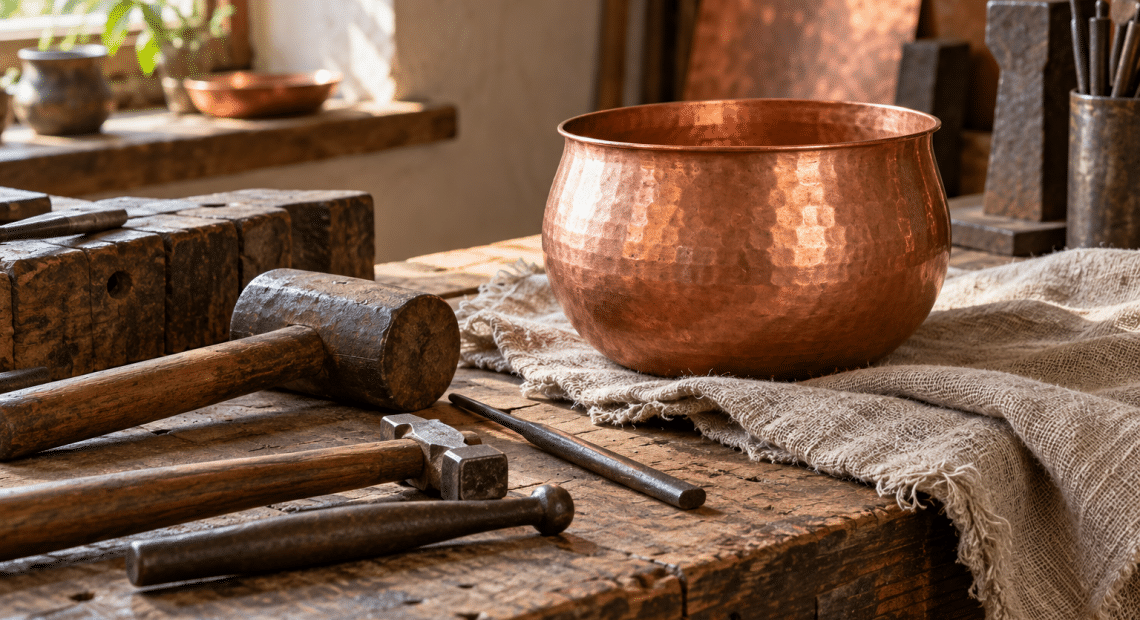
Copper can carry an electrical current, warm beneath a hand and acquire a changing surface with use. It can also carry a story: a gift, a memory, a reminder to act with greater attention. Those are different kinds of carrying. The material does not become less interesting when we distinguish its measurable properties from the meanings people give it.
That distinction matters whenever the language of energy moves between science and spiritual practice. A copper object may feel significant to its owner without that experience proving a physical mechanism. We can appreciate the metal, question a claim and keep a personal ritual intact. Curiosity becomes more useful when it asks what a statement actually describes.
Begin with the material you can investigate
The video above, Copper – Periodic Table of Videos, comes from the original Periodic Videos channel. It combines samples of the metal, a laboratory demonstration and discussion of its uses. Watch how the presenters move between an observation and an explanation. A change in color, a length of wire and an everyday object each open a different question.
The Royal Society of Chemistry’s copper entry describes the element and its applications. Its ability to conduct heat and electricity helps explain its practical importance. These properties concern how a material behaves under physical conditions. They do not, by themselves, tell us what will happen when a person wears a bracelet.
Conductivity is not a general-purpose certificate of benefit. A wire works within an arrangement: connections, a source of electrical potential and a path through which current can move. Saying that copper conducts electricity does not establish that a piece of jewelry restores someone’s energy. The second statement requires its own evidence; it cannot simply inherit the authority of the first.
Notice when the meaning of energy changes
In ordinary conversation, energy may mean alertness, enthusiasm, emotional atmosphere or the willingness to begin a difficult task. In physics, it has a more specific role in describing systems and their changes. Both kinds of language can be useful, provided we do not silently exchange one meaning for another halfway through an explanation.
You might say that a bracelet reminds you to return to an intention. That describes a relationship between an object and your attention. It is different from saying that the bracelet transmits a therapeutic frequency into your body. A meaningful reminder does not need an invented mechanism. Its usefulness can remain modest, personal and open to your own observation.
Try making the claim precise. What changed? When did you notice it? Could a different object serve the same purpose? These questions do not demand that you dismiss an experience. They help you describe it without asking the experience to prove more than it can. A clear account leaves room for another person to have a different response.
A nutrient is not the same as a wearable object
The NIH Office of Dietary Supplements explains that copper is an essential nutrient used in several bodily functions, and that excessive intake can be harmful. This is information about nutrition. It does not turn wearing copper into a way to meet dietary needs, and it does not establish a treatment benefit for jewelry.
The same care belongs around claims about germs. A 2021 EPA announcement concerned registered high-copper alloy surface products and specified laboratory testing and use conditions. It described those products as supplements to routine infection-control practices. That limited registration is not evidence that an ordinary bangle prevents illness or makes its wearer protected.
Neither of these sources provides support for presenting copper jewelry as a pain treatment, an electromagnetic shield or a device that charges the body. The distinction is practical: identify the product, the proposed effect and the conditions under which evidence was obtained. Similar words or shared ingredients do not make different claims interchangeable.
Choose a copper piece for what it offers
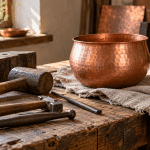
Flat Earth Shop’s Copper Bangle — Solar Arc offers an example of a recommendation grounded in the object itself. The current listing describes solid, hand-forged copper, a hammered surface and an overlapping adjustable design. It gives an approximate thickness of two millimeters and a listed fit for wrists measuring seven to eight and a half inches.
Those details help a person consider appearance, fit and everyday use. At our October 22 check, the bangle was available, and the page specified delivery within the United States. Check the current listing before ordering. The recommendation here concerns a piece of jewelry and its craftsmanship, not a health outcome or a promise of spiritual advancement.
If you choose to give it a personal meaning, name that meaning yourself. It might mark a commitment to finish a project or remind you to listen before answering. The bangle does not perform the commitment for you. It provides a familiar point of contact with a choice you remain responsible for making.
Let care be part of attention
A material object asks for ordinary care. The product’s guidance recommends gentle cleaning, careful adjustment and attention to the maker’s instructions. Copper can develop a patina and may leave a temporary green mark on skin. A changing color can be interesting to observe; it is not, on its own, evidence that toxins have been removed or a hidden process has been activated.
Notice how much of the object’s appeal survives when extravagant claims fall away. There is the texture of a hammered surface, the balance of an open curve and the way warm metal changes beside different clothing. Learning to appreciate those qualities can be a fuller encounter than reducing everything to a promised result.
A useful purchase can also begin with a pause. Decide whether you want an accessory, a symbolic reminder or information about a material. Those are different aims, and they suggest different questions. A photograph can help with appearance; measurements can help with fit; a scientific source can help with a physical claim. None should be made to answer every question at once.
You can extend that habit beyond copper. When a familiar scientific word appears in a spiritual explanation, ask whether it is being used literally or metaphorically. An honest metaphor can illuminate an experience. Trouble begins when the metaphor is offered as proof of a result that has not been demonstrated. Keeping the distinction visible protects both thoughtful inquiry and the freedom to find personal significance.
Keep wonder and accuracy in the same conversation
Before sharing a claim about copper, sort it into a sentence you can defend. “Copper conducts electricity” is a material statement. “This piece reminds me to pause” is a personal report. “This piece treats a condition” is a further claim that needs suitable evidence. Keeping those sentences distinct makes a conversation clearer without draining it of interest.
Return to the object with that clarity. Let science describe the behavior it can test, let tradition be identified as tradition, and let your own experience remain honestly your own. Copper offers enough color, utility and craftsmanship to reward attention. The meaning you give it becomes more trustworthy when it does not have to pretend to be a measurement.