Two musicians sit with instruments that look, at first glance, like rounded pieces of sculpture. They do not need a singer, a dramatic stage, or a spoken explanation to hold attention. In Once Again, Hang Massive let a short instrumental performance become a conversation. Danny Cudd and Markus Offbeat make room for each other, and the listener can hear how much interest can live inside a simple return. The video invites a modest question: what changes when we listen to a piece all the way through, then listen once more?
A performance that makes space for two
The video is a performance, not a lecture. It gives us no narrated lesson about attention and makes no promise about what the music will do to a listener’s body or mind. The interpretation belongs to us. What stands out is the visible and audible relationship between two players. One musician can begin an idea while the other leaves room for it; a familiar phrase can feel slightly different when it returns in a new context. That is a useful way to approach the piece without pretending to know every musical decision they made.
According to Hang Massive’s video page, the recording was filmed on an autumn morning in Bath Spa, England. The original YouTube upload appeared on December 29, 2011, while a Bandcamp release dates the track to October 1 of that year. Those dates describe different steps in the life of the work: a release and a later video upload. The band’s own biography introduces Cudd and Offbeat as the duo behind Hang Massive. Crediting the musicians and the original channel helps us meet the performance on its own terms rather than treating it as anonymous background sound.
Meet the instrument without inventing a legend
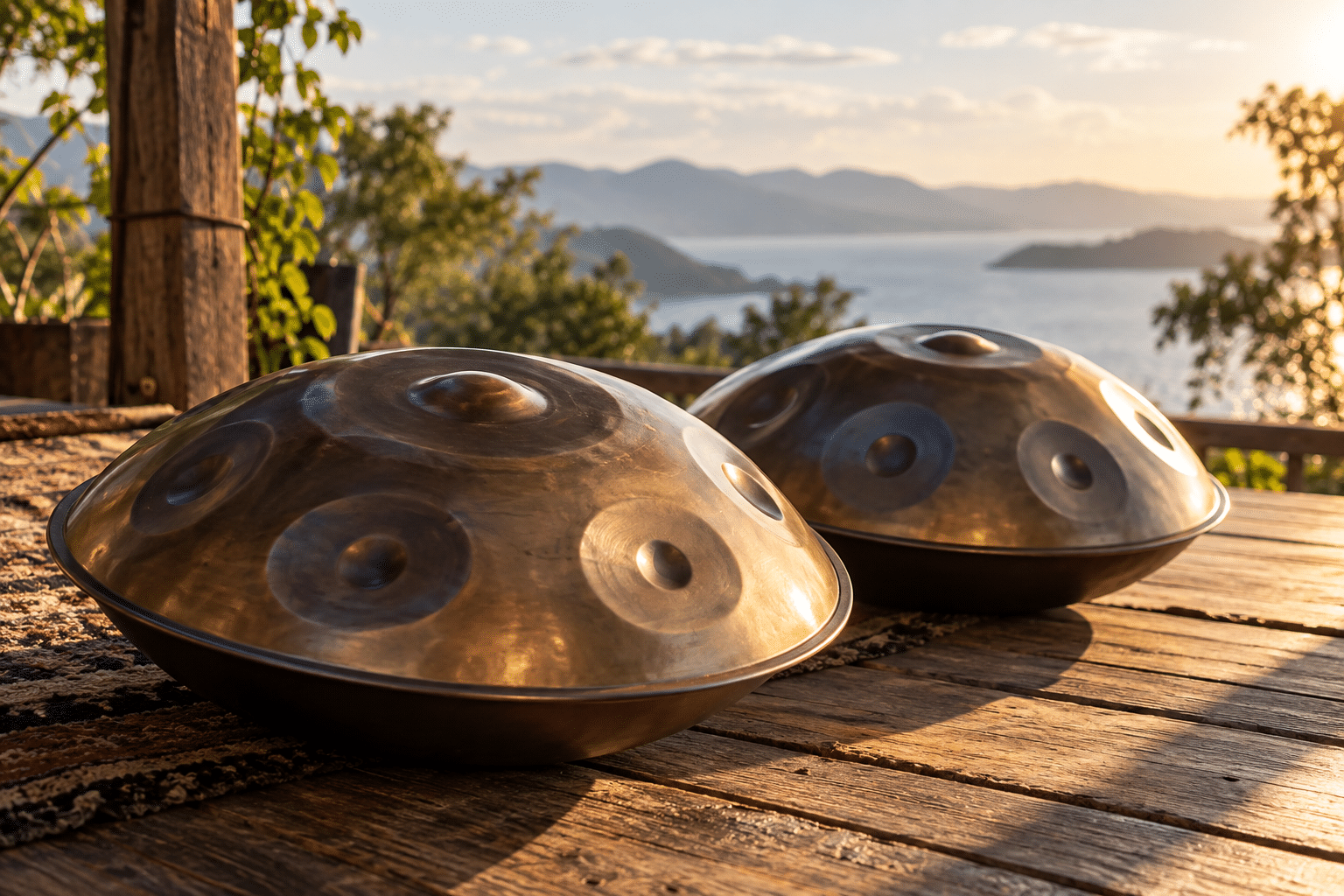
The two rounded steel instruments are Hang instruments. They belong to a modern story of instrument making, even though their tones may remind listeners of older percussion traditions. PANArt’s account of its history identifies Felix Rohner and Sabina Schärer as the makers who developed the Hang around 2000. That history is interesting enough without calling the instrument ancient, mysterious, or endowed with special powers. A new design can still become the starting point for a rich musical language.
Like many melodic percussion instruments, a Hang gives a player several pitches that can be reached directly by hand. The hands make the connection between movement and tone easy to see. The camera lets us notice posture, alternating gestures, and the space between gestures, but the music itself asks for more than looking. Listen for the way a note is allowed to ring, for a rhythmic idea that returns, and for the other player’s response. These are invitations to pay attention, not claims that a particular note must produce a particular feeling.
It is tempting to decorate this kind of music with claims about frequencies or healing. The video does not establish such effects, and the piece needs no medical promise to matter. Its achievement is artistic: two people using a limited set of materials to make a complete experience. For one listener, that experience may be calming; for another, it may be energetic, curious, or simply enjoyable. Our reactions are real as experiences, but they are not universal properties of the instrument.
What repetition can reveal
The title Once Again gives us a gentle way to listen. On a first play, the overall shape may be what we notice. We might hear a pulse, a few recurring figures, and the balance between the two instruments. On a second play, the same passage can invite a smaller question. Which sound belongs to the first player, and which belongs to the second? Does one phrase feel like an answer, or is that only a story we are adding? Where does the music leave an opening rather than filling every moment?
That distinction between hearing and interpretation is worth keeping. We can say that the performance uses two instruments and that a motif returns. Calling the exchange a conversation is a metaphor for how we experience it. It can be a helpful metaphor, but another listener may hear a shared current rather than a question and answer. Music leaves this room for difference. Careful listening does not require a single correct emotional reading; it asks us to notice what supports the reading we have.
Repetition is sometimes dismissed as sameness. Yet a return gives a listener something to compare. A phrase heard after a quiet interval may seem more spacious. A note struck while another one is still ringing can be heard differently from the same note on its own. We do not need technical vocabulary to notice that context changes experience. The second listen is not a test of whether we caught hidden information the first time. It is a chance to hear how attention itself changes.
A small listening practice
Try watching the full six-minute performance without reading comments or doing another task. You do not have to close your eyes or force a particular mood. Let the video occupy its own time. Afterward, write down three plain observations: perhaps an instrument’s shape, a recurring sound, or a moment when one player’s gesture caught your eye. Then add one sentence about what the performance suggested to you. Keep the observation and the suggestion separate.
If you want to listen again, choose a different focus. Watch one player’s hands for part of the piece, then shift to the other. Or listen without looking at the screen and notice whether your sense of the exchange changes. This is a practice in description, not a claim about therapy or brain training. It can make an ordinary encounter with art more deliberate. It may also make you more aware of how quickly we assign a story to sounds before we have heard the whole piece.
The value of an unhurried piece
A popular online video can easily become a fragment: a few seconds copied into a feed, a sound used beneath somebody else’s words, a tune that we recognize without knowing who played it. Returning to the original performance restores scale. There is a place, a pair of musicians, an instrument with makers, and a complete musical arc. The millions of views on the upload show that many people have found their way to it; the number cannot tell us what any one person heard.
Hang Massive’s Once Again is worth meeting as music. It asks nothing more demanding than a few minutes of attention, yet it offers enough detail to reward another pass. We can admire the craft without inventing a spiritual mechanism, and we can describe our own response without turning it into a rule for everyone. That leaves the performance open: two musicians, a contemporary instrument, and the possibility that listening once again may reveal something we missed the first time.