What would it take to change your mind about the ground beneath your feet?
Not your opinion of a politician, a wellness practice, or an ancient monument. Something more fundamental: the shape of the world itself. That is the territory Eric Dubay enters with How Everything Works on Flat Earth, a documentary whose title promises an alternative account of reality rather than a small correction to the familiar one.
For some viewers, that invitation feels liberating. For others, it feels immediately implausible. Either reaction can arrive before any serious examination begins.
There is another way to approach it: watch with genuine curiosity, separate a claim from its supporting evidence, and apply the same standard to every explanation. Questioning should deepen our understanding, not require us to choose a new allegiance.
What Dubay is proposing
On his own website, Dubay describes the documentary as an explanation of a stationary, geocentric plane model and a challenge to the conventional account of a rotating Earth orbiting the Sun. This is his stated position, not an established scientific finding. His accompanying post dates to June 11, 2020, so today’s selection is an invitation to revisit an existing documentary, not a claim that it is newly released. Read Dubay’s original description.
The distinction matters. An engaging presentation can introduce a hypothesis, but it cannot establish that hypothesis simply by presenting it confidently. Nor does an unfamiliar idea deserve dismissal merely because it is unfamiliar.
The useful question is not whether an explanation feels rebellious or reassuring. It is whether it makes clear predictions that survive comparison with the world.
This article is a viewing companion to that question, rather than a scene-by-scene account of the documentary.
Observation and interpretation are different things
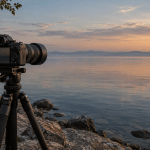
Imagine standing beside a calm stretch of water. The surface appears level. The horizon looks straight. Nothing in that immediate experience announces the vast scale of the planet.
Those are observations. A conclusion about the shape of the entire Earth is a further step.
The same distinction applies in everyday life. A building can appear small from far away without becoming smaller. A straight object can appear bent through water without changing shape. Our senses give us essential information, but interpreting that information requires attention to distance, perspective, scale, and the path light takes before reaching us.
Recognizing these limits does not mean distrusting your eyes. It means asking a better question of what your eyes show you.
When watching a claim about a horizon or a distant object, look for the measurement details. Where was the camera? How high was it? What was the distance? What were the conditions? Could another observer repeat the observation using the same setup?
A striking image is a starting point. A reproducible measurement takes the inquiry further.
What the established model actually says
The scientific account is not that Earth is a perfectly smooth, geometrically flawless sphere. NOAA describes it as approximately spherical, with a bulge around the equator and irregularities that require more detailed models for precise work. Geodesy measures Earth’s shape, orientation, and gravity field. An ellipsoid provides a practical mathematical reference; the geoid describes a gravity-related reference surface. NOAA explains Earth’s shape and the purpose of geodesy.
This distinction is worth understanding before comparing models. Challenging an oversimplified classroom illustration is not the same as overturning the measurements used in surveying and positioning.
A fair comparison asks what each model can calculate. Can it describe observed locations and distances consistently? Can other people use its methods and reproduce its results? Does the explanation remain the same when tested somewhere else?
The established evidence supports a roughly spherical Earth. Giving an alternative proposal a hearing does not mean treating the two positions as equally supported.
The sky provides shared questions
One productive way to move beyond argument is to consider observations that different people can compare from different locations.
When does the Sun rise? When does it set? How does the length of daylight change during the year? What happens near the poles?
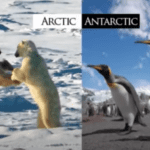
The Australian Antarctic Program describes periods at its coastal stations when the Sun does not rise in winter and periods when it does not set in summer. These are documented conditions of life and work in Antarctica, not merely an illustration in a textbook. Explore Antarctic sunlight hours.
Any proposed account of Earth’s geometry must explain observations like these alongside ordinary sunrise and sunset elsewhere. A model cannot reasonably claim to explain everything while answering only the observations that suit it.
A useful habit is to write down a prediction before checking the result. Predicting an unfamiliar outcome is a stronger test than inventing an explanation after seeing it.
Why conditions matter
Even a careful sky observation contains complications. The atmosphere bends light, a phenomenon called refraction. That affects the apparent position of objects near the horizon and the timing of sunrise and sunset.
The U.S. Naval Observatory explicitly includes these effects when discussing rise and set calculations. It also notes that variable atmospheric conditions limit the precision of predicted times. Read its rise, set, and twilight definitions.
That is not a license to explain away every inconvenient result. It is a reason to specify conditions and uncertainty honestly.
The principle works in both directions. An established explanation should not hide behind vague appeals to complexity. An alternative explanation should not ignore known optical effects because a photograph looks more compelling without them.
Good inquiry makes its assumptions visible.
Keep curiosity separate from identity
A difficult moment in any investigation comes when an idea becomes part of who we are.
We may start by asking whether something is true, then gradually shift toward defending the people, community, or sense of purpose associated with it. Changing our mind begins to feel like betrayal rather than learning.
This can happen around conventional beliefs as readily as alternative ones. The remedy is not to stop caring. It is to keep our commitment attached to the process rather than to a predetermined conclusion.
Try asking yourself three questions as you watch:
- What is the specific claim being made?
- What observation would distinguish it from the competing explanation?
- What result would make me reconsider my current position?
That last question is especially revealing. If nothing could change our minds, we are defending a conviction, not testing an explanation.
A deeper form of independent thinking
Dubay’s documentary offers a direct challenge to an accepted worldview. Viewers can engage with that challenge without adopting its conclusions or ridiculing those who find it compelling.
The deeper opportunity is to practice discernment: notice where evidence ends and interpretation begins; distinguish uncertainty from proof; and resist the temptation to confuse opposition to authority with independence of thought.
You do not have to surrender wonder to take measurements seriously. You do not have to accept a claim to listen carefully. And you do not have to abandon the search for meaning because the evidence points somewhere less dramatic than you expected.
Watch the featured video with those freedoms intact. Bring your questions, but bring the same questions to every proposed answer.
A genuinely open mind is not one that accepts everything. It is one that remains willing to learn.