A small tree, a large invitation
A tree enclosed in a circle can look immediately familiar, even when we cannot say where that familiarity began. Branches reach upward; roots answer them below. A pendant turns this relationship into something that can rest against a shirt or lie in a palm. Its appeal may be visual before it becomes philosophical. The interesting question is how we move from appreciating a design to telling a story about it.
This article begins with a current copper necklace and opens a window onto one particular world-tree tradition. It does not propose that every tree pendant shares one ancient origin. A modern object can invite thoughtful reflection without being an archaeological reproduction. Giving its different layers separate names—design, documented story and personal interpretation—makes the encounter richer, because we no longer need one layer to pretend to prove another.
Meet the object before interpreting it
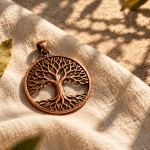
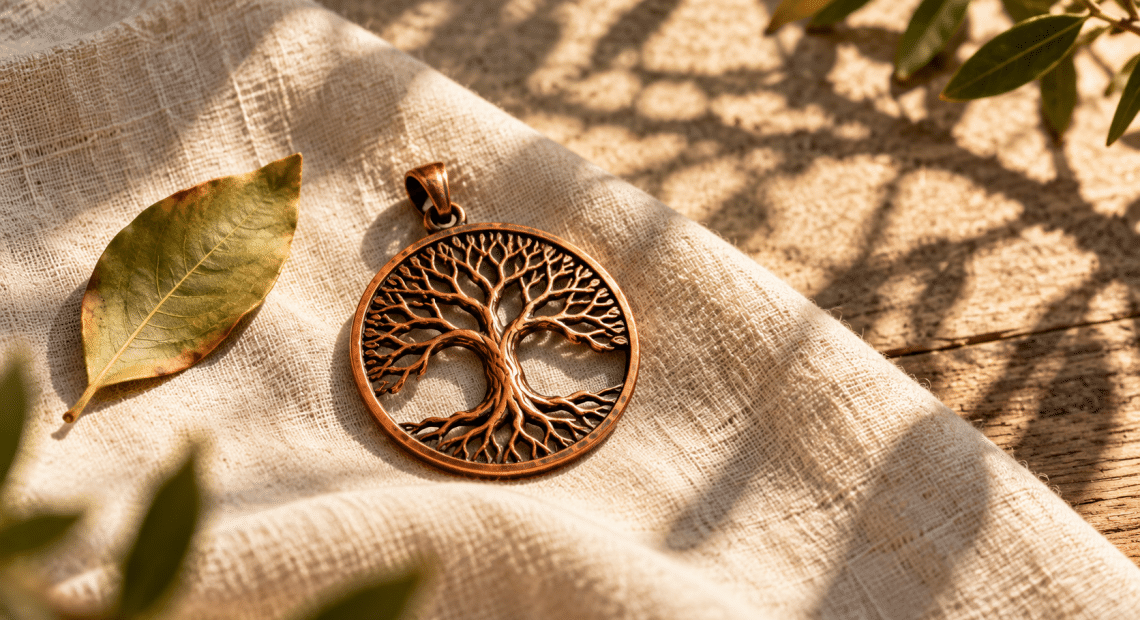
The current Flat Earth Shop listing calls its piece the Copper Tree of Life Necklace — Evergreen Spirit. At the time of checking, it was listed at $74.51 with ten available and shipping restricted to the United States. The seller describes a pure, uncoated copper pendant, handmade in Turkey, accompanied by a stainless-steel chain approximately 20.5 inches or 52 centimetres long. Those distinctions matter: a copper pendant does not make its chain copper too.
These are present-day retail descriptions, not evidence of an ancient lineage or an independent materials test. The listing also describes natural patina. That changing surface offers an appealing metaphor for time, but it establishes no spiritual property. Choose a necklace for its design, materials and suitability for the wearer. Symbolic interest does not require a promise that jewellery will heal, protect an energy field or transform the body.
One tradition, read on its own terms
In the accompanying video, Old Norse specialist Jackson Crawford introduces Yggdrasill, the world tree of Norse myth. The medieval Prose Edda gives us a literary source to read alongside that explanation. In Gylfaginning, the tree is described as an ash with far-reaching branches and three roots. Its account places wells, divine activity and other beings around the tree. These are elements of a mythic narrative, not a botanical report.
A branching necklace can remind a modern viewer of Yggdrasill, but resemblance alone cannot identify the designer’s intention. Nor can it turn the pendant into a historical Norse amulet. Keeping this distinction allows us to enjoy the old story without inventing a provenance for a new product. Crawford’s short presentation is a useful doorway; the source text remains the place to encounter the account’s particular language and imaginative landscape.
Look closely before reaching for a universal key
Try describing the visible form without naming its supposed meaning. Is the trunk straight or twisted? Do the branches reach evenly, or does one side feel heavier? Are the roots clearly separate from the crown? A circle can make a busy pattern feel contained; an open space can let a silhouette breathe. These are observations available to anyone who looks, whether or not they share a religious framework.
Only afterward introduce interpretation. To one wearer, roots may suggest family. To another, they may suggest obligations that remain unseen. A canopy can evoke generosity, growth or the shelter of a place remembered. These readings can be sincere without being universal. Saying that a design reminds you of something is a precise statement about your encounter with it. Saying that it has always meant the same thing everywhere asks for historical evidence that a pleasant resemblance cannot supply.
A gift needs room for another person
A symbolic necklace given as a present introduces another relationship: the difference between the giver’s intention and the recipient’s interpretation. You may choose a tree because it recalls a shared garden or a family connection. The person receiving it may simply enjoy the pattern. That difference need not diminish the gift. An offered meaning is more generous when it does not become a demand that someone else feel exactly what you felt.
Consider accompanying it with a short, specific note rather than a catalogue of claimed powers. Explain the memory or quality that led you to choose it. Leave the recipient free to wear it, display it or understand it differently. This approach also makes practical attention part of the gesture: the listed materials, chain length and delivery restrictions matter alongside symbolism. Care for a person is expressed through those ordinary details as much as through an elaborate story about an object.
Roots can also ask difficult questions
The tree need not function only as an encouraging emblem. Roots can nourish, but they can also become an image of what we are reluctant to examine. Which inherited habit still guides a decision? Which family story do we repeat without asking who has been left outside it? Such questions give the symbol practical depth. They turn a decorative theme into an invitation to pay attention to a particular life.
Imagine wearing the pendant on a day when you must decide whether to keep a difficult promise. Its usefulness would lie in the question it helps you remember, rather than in a hidden force attributed to the metal. You might ask what sustains this commitment, what it costs and whom it serves. The necklace does not supply the answer. The act of returning to the question is your own contribution to its meaning.
Personal ritual with honest boundaries
A small ritual might be as ordinary as setting the necklace beside a notebook each evening. Write down one connection you tended that day and one you neglected. Perhaps you returned a call, listened without interrupting or noticed that your attention was elsewhere. There is no prescribed result and no special frequency to achieve. The object marks a moment; the reflection belongs to the person.
If you draw on a named tradition, retain its name and learn something of its sources. Avoid gathering disconnected motifs into a claim that all cultures concealed one identical teaching. Similar shapes can coexist with different stories, practices and histories. Respect sometimes means allowing those differences to remain. A personal interpretation can stand comfortably beside a historical account when we make clear which is which, rather than using antiquity as a certificate for our own preferences.
Wear a question, rather than a conclusion
The most durable relationship with a symbolic object may be one that stays open. Today a tree might remind you of belonging; later it might bring independence into focus. Changing your reading does not mean the object failed. It may mean your circumstances have changed, or that you have begun to see a detail you once overlooked. A symbol can accompany reflection without becoming a fixed instruction.
That is a modest and worthwhile role for a contemporary copper necklace. Appreciate the actual piece, read the particular stories that interest you and let personal meaning remain recognisably personal. The old world tree and the new pendant can meet in your imagination without collapsing into the same thing. What grows from that meeting is not proof of a secret history. It is an opportunity to look carefully, remember responsibly and decide what you wish to cultivate.