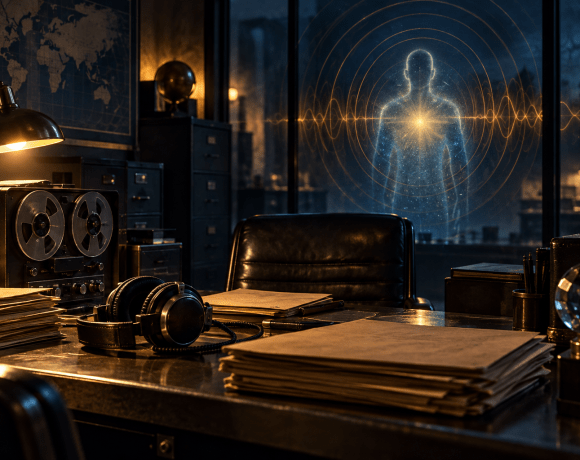
A dark image appeared on an internet message board in January 2012. It claimed that an unknown group was looking for highly intelligent people and that a hidden message would lead the right readers onward. The signature was only a number: 3301. What followed crossed from screen to street, from simple substitutions to literary clues, and from solitary curiosity to international teamwork. Cicada 3301 became a modern legend because its puzzles were real enough to trace, while the people and purpose behind them remained difficult to pin down.
A mystery assembled from ordinary tools
LEMMiNO’s documentary, Cicada 3301: An Internet Mystery, is a compelling guide to the early puzzle trail. The film follows hidden messages in images, cryptographic methods, references to books, and clues that required participants to look beyond a browser window. Its atmosphere is part of the appeal, but the underlying events are not merely a fictional thriller. The creator’s accompanying reference page lists archived clues, puzzle assets, interviews, and corrections, giving viewers a way to follow the trail for themselves.
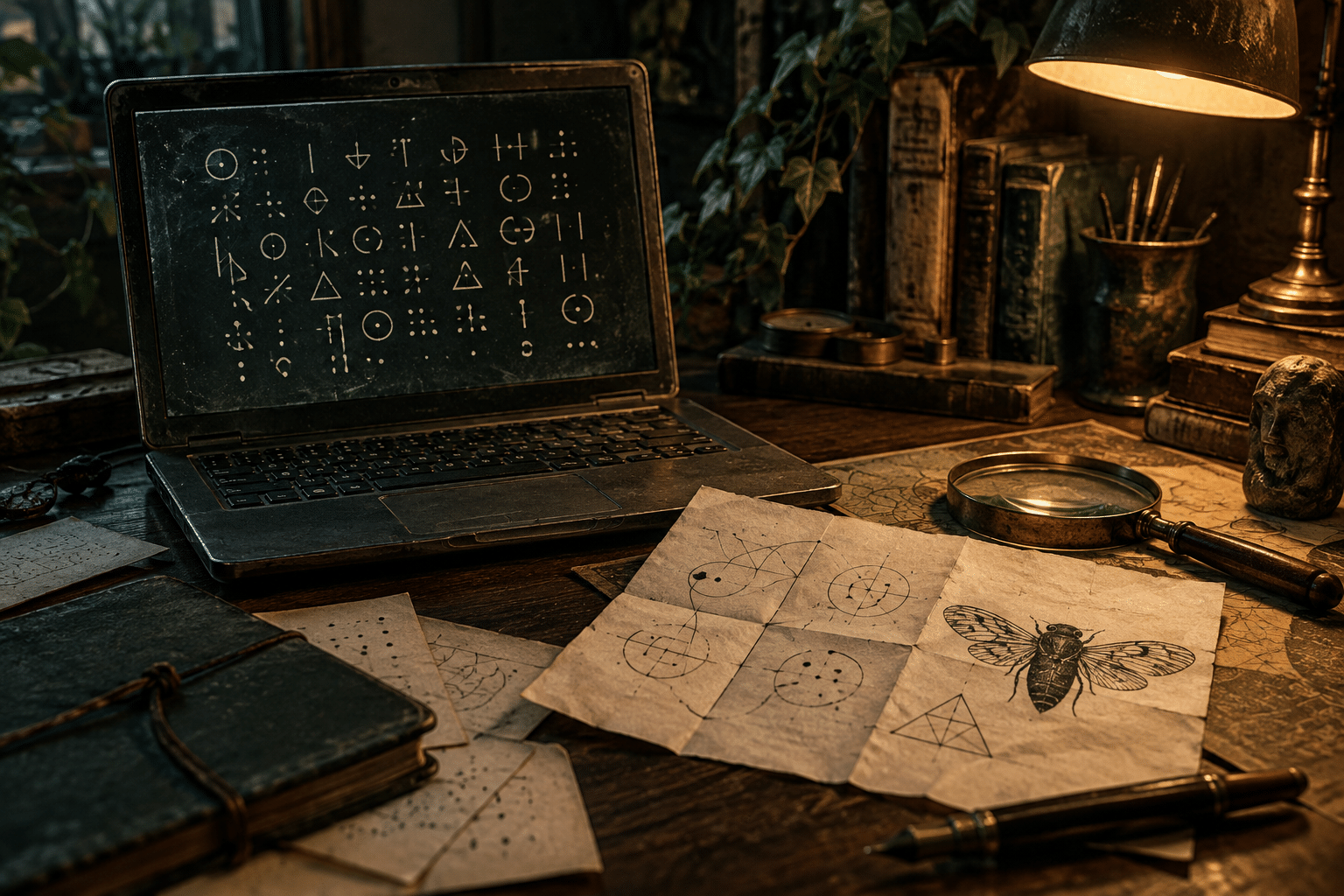
The first message did something wonderfully simple: it made the audience work. Rather than offering a story to consume, it offered a door that would open only for someone willing to examine the image. A clue led to another clue, and the process rewarded a mix of technical skill, patience, and lateral reading. Hidden data in a file might matter as much as an old text or a pattern in a sequence of numbers. The puzzle’s design made the internet feel, for a moment, like a place with secret rooms.
That effect did not depend on a supernatural explanation. A handful of people with enough time, knowledge, and coordination could build an elaborate game. The question was who had done so here, and why. The answer mattered partly because the puzzles themselves seemed to test qualities an organization might value: persistence, discretion, collaboration, and comfort with encryption.
When the web reached the physical world
One famous stage pointed solvers toward coordinates and physical posters in cities around the world. QR codes on those posters sent the search back online. The movement between digital and physical clues gave Cicada a scale that most web riddles lack. It also changed the experience of solving. Someone at a keyboard could decode a clue but still need another person in another city to visit a location. A mysterious author had, in effect, drafted a temporary network of strangers.
WNYC’s 2013 account spoke with a teenage solver known as Tekk, who described working with an international team called #decipher. The group pooled skills and kept watch across time zones. That firsthand perspective is a useful counterweight to the solitary-genius image that mysteries often invite. The puzzle was not solved by one person making one brilliant leap. It unfolded through conversation, division of labor, wrong turns, and many small acts of verification.
There is an ethical wrinkle in that story too. Tekk told WNYC that members of his team misdirected competing solvers to stay ahead. Even a playful search can become a contest over scarce access. Cicada’s clues may have encouraged cooperation, but they also created pressure to withhold information. The same puzzle could reveal both the generosity and the competitiveness of an online community.
Theories are not identities
Who was behind 3301? Suggestions have ranged from intelligence agencies to technology companies, artists, privacy advocates, and secret societies. These possibilities are part of the legend, but none should be presented as an established identity without evidence. An intricate cryptographic puzzle is not, by itself, the signature of a government. Nor does unusual symbolism prove a hidden order. Aesthetic choices can be meaningful without being a reliable fingerprint.
WNYC reported Tekk’s account of what happened after he reached a later stage. According to him, the people behind the puzzle described themselves as anonymous developers interested in open-source tools for privacy and freedom of information. That is firsthand testimony about what one participant was told and experienced. It does not independently identify every organizer or explain every later message attributed to Cicada. The most honest account preserves both the value and the limits of his report.
LEMMiNO’s film was published in 2018, and its reference page describes the evidence available to the creator at that time. Viewers should resist treating a documentary’s final question as a permanent status report. Online archives, later claims, and solver communities can change. The film remains a clear presentation of the early trail; its date is part of the context in which it should be watched.
Why puzzles attract stories about power
Cicada 3301 arrived in a world already fascinated by anonymous networks and secret recruitment. It is easy to imagine a hidden agency selecting candidates with a test that never mentions its name. Such a story turns an obscure clue into a glimpse of a larger system. That can be exciting, but it also offers a shortcut: if we decide the author in advance, we stop asking which pieces of evidence actually support that decision.
The opposite shortcut is to dismiss the whole event as a marketing stunt because some parts resemble an alternate reality game. The documented puzzle trail, the physical posters, and the participant interviews deserve more attention than a shrug. A carefully made mystery can be a real cultural event even if its builders are ordinary people. The experience of the solvers is not made imaginary by uncertainty about the organizers.
A good reading of Cicada keeps three layers separate. There are documented artifacts: images, messages, and posters preserved in archives. There are participant accounts, which tell us what some solvers saw and believed. Then there are interpretations of motive and identity. Each layer is valuable, but they do not carry equal weight. Mixing them together creates the illusion of a solved case when the most important inference remains open.
What the mystery teaches about attention
The enduring pleasure of this story lies in its demand for attention. Most online material asks us to scroll past it. Cicada asked readers to pause, inspect a file, compare a text, and test a hunch. It made expertise collaborative: a programmer might need a reader of literature; a person in one country might need someone standing at a lamppost in another. The clues created a temporary commons of knowledge and effort.
There is a lesson for spectators as well. When a documentary makes an elegant sequence out of a messy puzzle, we can enjoy its craft and still ask where the cuts are. Which clue is shown directly? Which step rests on a reconstruction? Where does the filmmaker offer an interpretation rather than a record? LEMMiNO’s source list helps make that distinction possible. Its corrections are a reminder that even careful storytellers can make small mistakes while describing a complex trail.
Perhaps no final reveal could match the experience of following the clues. The uncertainty is frustrating, but it is also what keeps the story honest. Cicada 3301 is a case study in how humans make meaning from patterns, collaborate across distance, and project grand explanations onto anonymous work. We can appreciate the mystery without pretending to know more than the record allows. The best question may be less “Who must have done this?” than “What can we actually show?”