
For centuries, secret societies have fascinated historians, researchers, philosophers, and curious minds alike. Hidden behind closed doors, protected by rituals, symbols, and traditions, these organizations have inspired countless books, documentaries, and debates. Some are well documented in history, while others have become the subject of speculation and conspiracy theories.
One of the most popular documentaries on the subject, “Enter the Secret World of the Freemasons,” has attracted millions of viewers by offering a rare glimpse inside one of the world’s oldest and most influential fraternal organizations. The documentary explores Freemasonry from the perspective of its members, while raising broader questions about the role secret societies have played throughout history.
Whether viewed as charitable organizations, philosophical brotherhoods, or influential networks, secret societies continue to capture public imagination because of one simple fact: people naturally wonder what happens behind closed doors.

What Are Secret Societies?
A secret society is generally defined as an organization whose membership, rituals, ceremonies, or internal teachings are partially or completely hidden from the public.
Throughout history, many secret societies have existed for different purposes.
Some focused on:
- philosophy
- education
- spirituality
- politics
- scientific knowledge
- mutual support
- religious protection
Others developed exclusive initiation ceremonies that symbolized personal transformation and progression through different levels of knowledge.
While secrecy often creates suspicion, history shows that many organizations operated privately simply because political or religious persecution made openness impossible.

The Origins of Secret Societies
Secret societies are not a modern invention.
Ancient civilizations contained mystery schools where sacred knowledge was reserved for initiated students.
Examples include:
- Ancient Egyptian priesthoods
- The Eleusinian Mysteries in Greece
- Pythagorean schools
- Early Gnostic communities
- Medieval guilds
Knowledge was often transmitted symbolically rather than literally.
Geometry, architecture, astronomy, mathematics, and philosophy frequently appeared together within these traditions.
Many historians believe these schools preserved valuable knowledge during periods of political instability.
Freemasonry: The World’s Most Famous Secret Society
Among all secret societies, none has received more attention than Freemasonry.
Modern Freemasonry emerged in Britain during the early eighteenth century, although it traces many of its traditions to medieval stonemason guilds and symbolic teachings rooted in earlier history.
The documentary explores how Freemasons describe their organization.
Members emphasize values such as:
- integrity
- charity
- self-improvement
- brotherhood
- moral responsibility
- lifelong learning
Freemasonry is organized into lodges where members participate in ceremonial rituals designed to teach ethical principles through symbolism.
Although outsiders often focus on secrecy, much of Freemasonry’s charitable work is publicly documented around the world.
Why So Much Secrecy?
Perhaps the greatest question surrounding secret societies is simple:
Why keep anything secret?
There are several historical reasons.
Private ceremonies create a sense of belonging and preserve traditions across generations.
Some organizations developed secrecy because governments or religious authorities once prohibited independent philosophical groups.
Others viewed secrecy as a way to ensure members experienced symbolic lessons personally rather than simply reading about them.
However, secrecy naturally creates speculation.
Whenever information is limited, imagination often fills the gaps.
The Language of Symbols
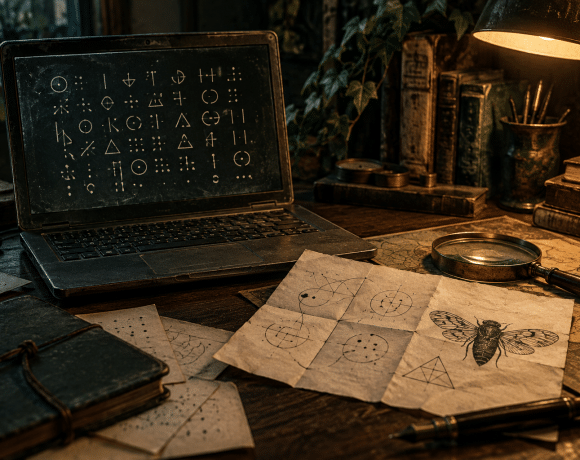
One reason secret societies continue attracting attention is their extensive use of symbolism.
Symbols communicate ideas without words.
Throughout history, many organizations have used symbols including:
- the square and compass
- pillars
- pyramids
- the all-seeing eye
- geometric patterns
- stars
- circles
- light and darkness
Importantly, many of these symbols existed long before Freemasonry or any modern secret society.
They appear across numerous civilizations because they often represent universal philosophical concepts such as wisdom, balance, truth, knowledge, or spiritual growth.
Context matters when interpreting symbolism.
The same image may carry different meanings depending on the culture or historical period.
Secret Societies and Influence
A common question asks whether secret societies influence politics, finance, or world events.
Historically, many influential individuals have belonged to organizations such as Freemasonry.
These have included political leaders, scientists, military officers, artists, architects, and business figures.
Membership alone, however, does not necessarily imply coordinated control or shared political goals.
Large organizations often contain members with diverse beliefs and viewpoints.
Separating documented historical facts from broader speculation remains essential when examining these topics.
The Rise of Conspiracy Theories
Because secret societies operate with varying degrees of privacy, they have become central subjects within conspiracy culture.
Organizations frequently discussed include:
- the Illuminati
- Skull and Bones
- Rosicrucians
- Knights Templar
- Bohemian Club
Some historical organizations unquestionably existed.
Others continue operating openly today.
Many claims surrounding their alleged activities, however, remain unverified or rely on speculation rather than documentary evidence.
Critical thinking is especially important when evaluating extraordinary claims.
Reliable historical sources, original documents, and multiple independent references provide stronger foundations than anonymous internet posts.
Why People Remain Fascinated
Secret societies represent more than mystery.
They symbolize humanity’s lifelong search for hidden knowledge.
Across cultures, people have always believed that wisdom exists beyond ordinary perception.
Whether through philosophy, meditation, science, religion, or personal experience, individuals continually seek deeper understanding of life and reality.
Secret societies became associated with this search because they promised access to knowledge unavailable elsewhere.
Whether that promise reflected symbolic teachings or genuine hidden information continues to inspire debate.
Lessons Beyond Secrecy
One message repeated throughout the documentary is that Freemasonry emphasizes personal improvement.
Members often describe the symbolic journey as transforming the individual rather than changing the world directly.
Many of the lessons involve:
- honesty
- discipline
- responsibility
- compassion
- lifelong learning
- service to others
These principles are hardly unique to Freemasonry.
They appear across philosophical, religious, and spiritual traditions worldwide.
The documentary encourages viewers to look beyond sensational headlines and explore what these symbols actually represent.
Separating Fact from Interpretation
One of the greatest challenges when discussing secret societies is distinguishing between:
Documented history
These include verified records, historical documents, published archives, and academic research.
Reasonable interpretation
Historians sometimes disagree about motivations, symbolism, or historical connections.
Interpretation fills gaps where complete evidence is unavailable.
Speculation
Claims lacking reliable supporting evidence belong in the category of speculation until independently verified.
Understanding these distinctions allows readers to investigate complex topics thoughtfully without accepting or dismissing ideas prematurely.
Why Secret Societies Still Matter
Whether viewed historically, philosophically, or culturally, secret societies continue influencing literature, movies, architecture, and popular imagination.
They remind us that knowledge has often been protected, preserved, and transmitted through symbols rather than direct instruction.
They also encourage curiosity.
Curiosity itself has driven humanity’s greatest discoveries.
The healthiest approach is neither blind belief nor automatic dismissal.
Instead, it is careful investigation, open-minded inquiry, and respect for evidence.
Final Thoughts
The documentary “Enter the Secret World of the Freemasons” offers viewers an opportunity to look inside one of history’s most discussed organizations while encouraging broader reflection on secret societies as a whole.
Some mysteries surrounding these organizations have been solved through historical research.
Others remain subjects of ongoing investigation and debate.
Perhaps the greatest lesson is not whether secret societies possess hidden power, but that the pursuit of knowledge has always shaped civilization.
Throughout history, wisdom has often been passed from teacher to student, preserved through symbols, rituals, and shared traditions.
Whether those traditions were designed to protect knowledge, inspire personal growth, or simply strengthen communities depends on the organization and the historical context.
Ultimately, the study of secret societies invites us to ask thoughtful questions, examine reliable evidence, and appreciate the complex relationship between history, symbolism, and human curiosity.
In a world filled with information—and misinformation—the greatest secret may not be hidden inside a lodge at all.
It may be the importance of learning how to seek truth with both an open mind and a critical eye.